
September 18, 2026
A solar shade is not defined by how dark the fabric looks. It is defined by how the weave manages daylight, glare, view and solar exposure. Two fabrics that appear almost identical in a sample book can behave very differently on a west-facing wall of glass.
The most useful specification number is openness: the percentage of open area in the woven fabric. Lutron commonly offers solar-screen fabrics at 1%, 3%, 5% and 10% openness, and each level changes the balance between view and protection.
This guide is about the fabric decision. For the motor, hardware, pockets and control-system families, see our Lutron Palladiom, Sivoia and Triathlon motorized-shade guide.

Openness describes how much of a woven solar fabric is literally open space. A 1% openness fabric has a tighter weave than a 10% openness fabric.
As openness becomes lower, the fabric generally blocks more visible light and glare and increases daytime visual privacy, but the view becomes less clear. As openness becomes higher, the view becomes stronger and more daylight enters the room.
That is why “which percentage is best?” has no universal answer. The right percentage depends on the direction of the glass, the room’s use, neighboring sightlines, artwork, screen locations and how important the exterior view is.
A 1% solar fabric is a tight weave. It is useful where glare and direct solar exposure are severe, where artwork needs more protection, or where daytime privacy matters more than maintaining a crisp view.
The tradeoff is obvious when standing at the window: the exterior is more obscured than it would be behind a 5% or 10% fabric. In an ocean-view or hillside residence, that may be too expensive a visual sacrifice for every window, even if it is correct on one difficult west-facing elevation.
Three percent is a common architectural compromise. It can reduce glare substantially while preserving more exterior visibility than a 1% weave. In home offices, media-adjacent rooms and sunny west-facing spaces, it is often one of the first samples worth testing.
It is still not a privacy fabric in the same sense as an opaque roller or blackout layer. At night, the lighting relationship reverses and people outside may be able to see through the shade when the interior is brighter.
Lutron’s own design guidance often points toward 5% or greater openness when maintaining a view is a priority. Five percent allows a clearer connection to the exterior while still cutting a meaningful amount of glare and direct brightness.
For a living room overlooking San Francisco, the Bay or a landscape, 5% may preserve more of the reason the glass was designed in the first place. But a television directly opposite that glass may still require a tighter fabric or a second layer.
A 10% fabric has a visibly more open weave. It preserves a stronger view and admits more daylight, which can be excellent on less aggressive orientations or where the architecture prioritizes transparency.
It also gives the designer less glare and privacy control. A 10% fabric is rarely the answer simply because “we want to see out.” The direction of the sun and the room activity still need to be tested.

Color is not merely decorative. Lutron notes that dark solar fabrics tend to reduce visible glare and can produce a clearer view through the shade because the eye is not looking through a bright reflective field. That is why dark solar fabric is common in view-oriented rooms and commercial glazing.
Light-colored fabric can reflect more solar energy back toward the glass and may be useful where heat management is a priority, but it can appear brighter from inside and soften the exterior view. Dual-sided performance fabrics can combine a lighter exterior face with a darker interior face to pursue both goals.
The best selection is made at the actual window. Small memo samples are useful for color, but a large hanging sample reveals much more about view and glare.
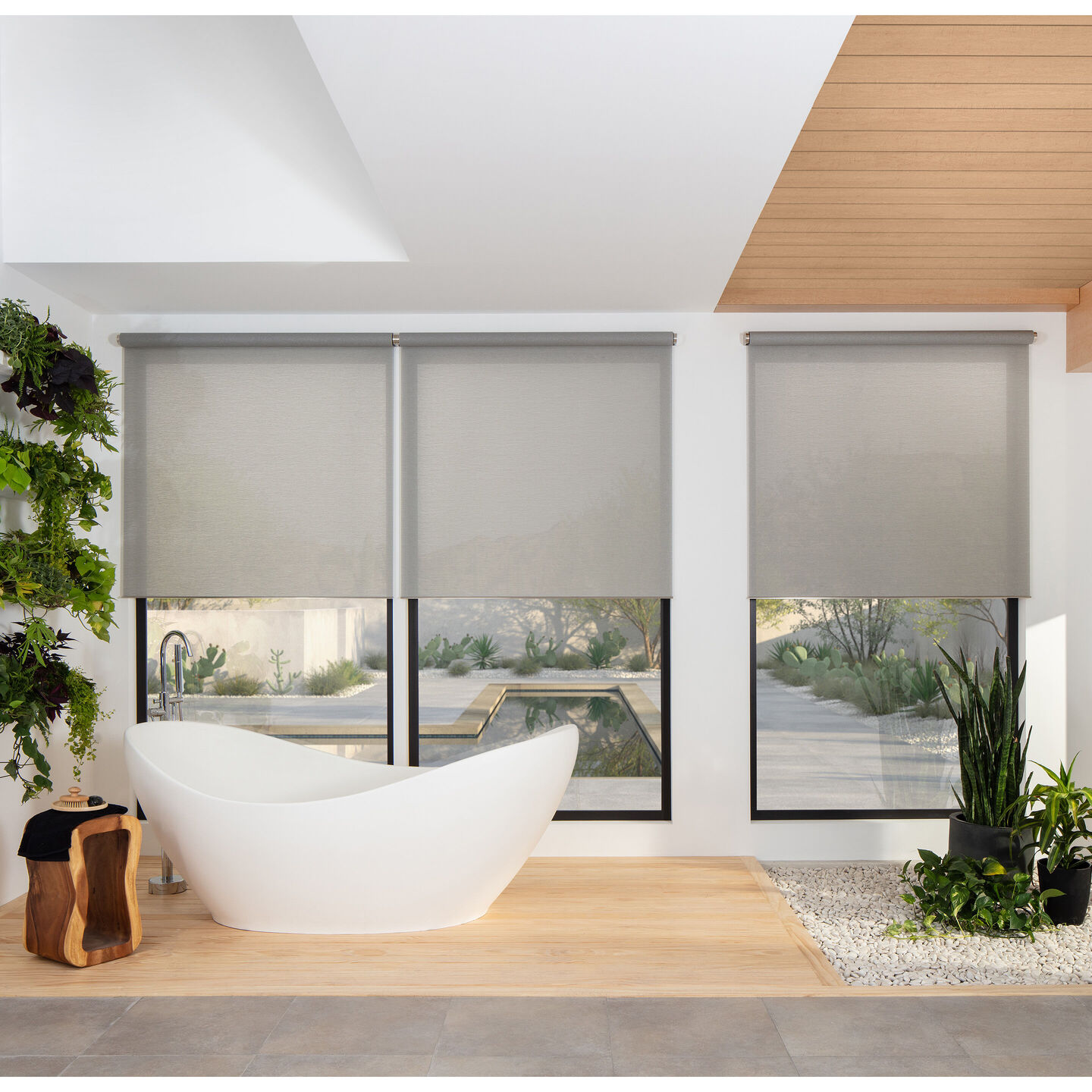
During the day, often partially. At night, do not assume they do.
Solar shades work because the eye tends to see toward the brighter side. During a sunny day, the exterior is usually brighter than the room, so a person inside can see outward more easily than someone outside can see in. After dark, with interior lights on, the relationship reverses.
If nighttime privacy is essential, use a dedicated privacy/opaque layer, blackout shade or drapery rather than expecting a solar screen to perform two contradictory jobs.
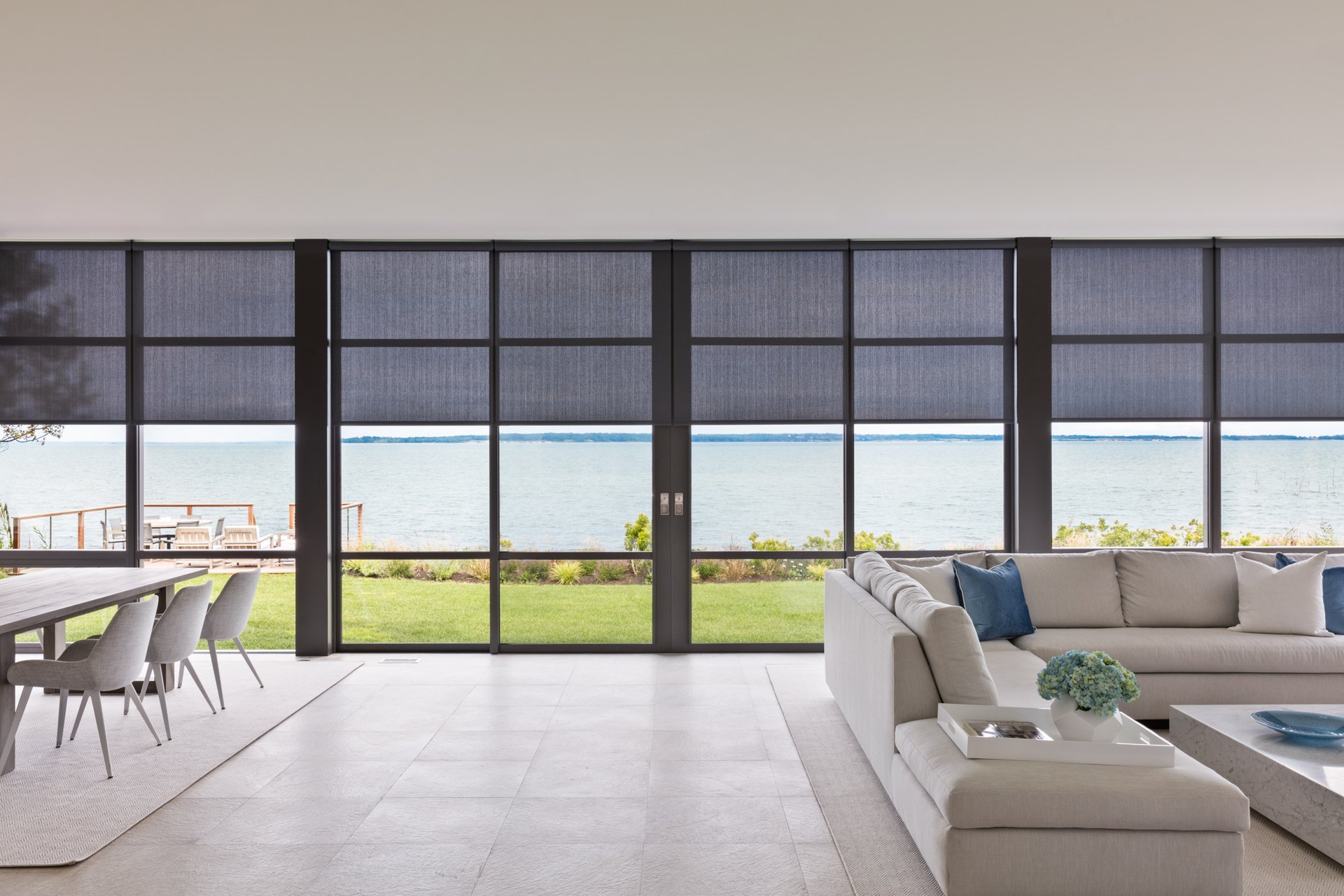
A solar shade filters daylight; it does not create darkness. A blackout fabric is opaque, but even an opaque roller may admit light at the sides unless the system is designed with appropriate side channels, sill details or overlapping architecture.
Bedrooms, nurseries and theaters often benefit from a dual-shade strategy: a solar or sheer fabric for daytime light management and a separate blackout layer for darkness and privacy. That decision changes the required pocket depth, so it belongs in the architectural drawings early.
West-facing glass can be especially difficult in the Bay Area because low afternoon sun can enter directly at eye level and hit televisions, artwork and seating. A tighter openness may be justified even when the view is important.
East-facing glass has a similar issue in the morning. Bedrooms and breakfast spaces may need different shade behavior depending on whether the goal is early daylight or glare control.
South-facing glass experiences a different seasonal solar path and may benefit from automated positioning rather than simply lowering a shade fully all day.
North-facing glass often sees softer daylight and may tolerate a more open fabric, though privacy and neighboring buildings can be the deciding factors instead.
Solar fabrics can reduce the amount of visible light and UV reaching interior materials, which can be useful for artwork, textiles and finishes. They should not be presented as a guarantee against fading. Exposure depends on the glazing, fabric performance data, orientation, time, material sensitivity and how often the shade is actually deployed.
For important collections, we coordinate fabric selection with the lighting and shade schedule so sunlight control and electric art lighting are treated together.
The old version of this article treated interior solar roller shades and exterior screens as essentially the same product. They are not.
An interior solar shade is protected by the building envelope and is selected around interior hardware, fabric, privacy and daylight control. An exterior motorized screen has to address wind, weather, side retention, exterior-rated motors, drainage, corrosion, structural attachment and safe operation outdoors.
For patios, loggias, large openings and specialty exterior shading, those engineering conditions become central. We will cover them in depth in Regent5’s forthcoming specialty indoor/outdoor shade guide.
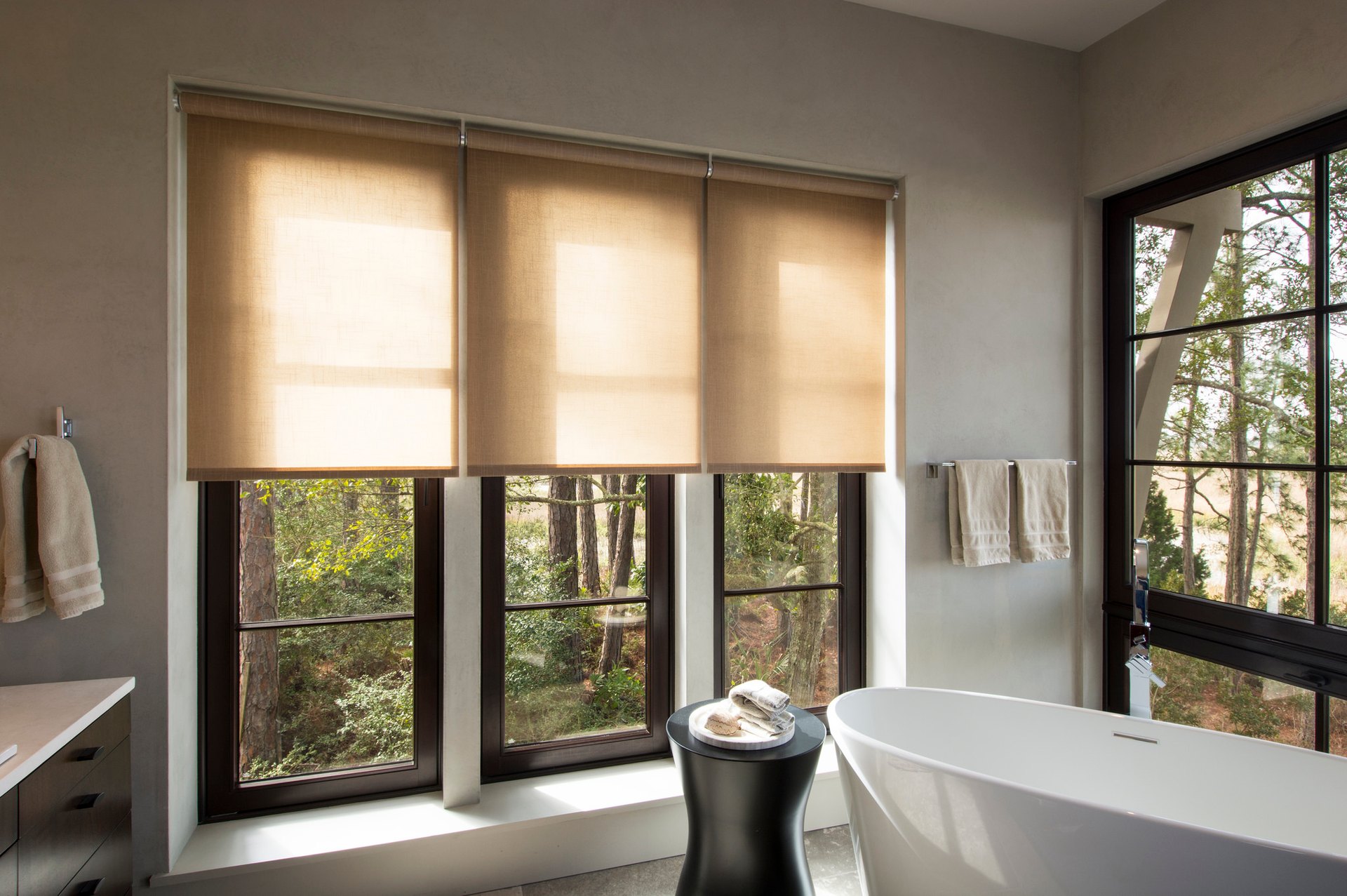
Once the fabric is correct, automation can keep it useful. Lutron systems can coordinate compatible shades with time, scenes and location-aware sun control. A west-facing shade can lower before glare becomes severe, then reopen as the sun moves. A Video Call scene can close the one shade that creates backlight while leaving the rest of the room open.
The motorization does not rescue a poor fabric choice, but it does make a good fabric much more likely to be used consistently.
Regent5 designs and integrates motorized solar, privacy and blackout shading for custom homes throughout the San Francisco Bay Area and Northern California. We review window orientation, view, adjacent properties, room use, glazing, shade pockets, power and automation together rather than choosing a fabric from percentage alone.
If you are comparing openness factors for a specific home, contact Regent5 for a shade and daylight review. Large samples at the actual glass are often the fastest way to make a confident decision.
Lutron: layering window treatments and openness
Lutron: choosing window shade fabrics
Lutron motorized roller shades
Fabric performance varies by weave, color and product. Confirm current manufacturer performance data for final specification, especially where glare, artwork protection or thermal performance is critical.


.svg)

© 2024 Regent5, LLC. CSLB C10 & C7 License 1033103.