
September 16, 2026
Alexa+ and Gemini for Home make voice assistants much better at understanding natural language. They do not replace the control system underneath a professionally integrated home.
That distinction is more important in 2026 because both consumer platforms have moved quickly. Alexa+ is now broadly available in the U.S.; Gemini for Home is active across eligible Google Home devices and powers Google’s new Home Speaker. The assistants are more conversational, can interpret multi-step requests and are becoming more useful as smart-home interfaces.
For a Lutron, Savant or Control4 residence, that is an interface upgrade—not a reason to redesign the core system.
As of September 2026, Amazon says Alexa+ is available to everyone in the U.S. The full service is included for Prime households and is also offered as a paid subscription for non-Prime users, while a limited text-chat tier is available without Prime.
Amazon describes Alexa+ as a generative-AI assistant capable of more natural conversation, multi-step actions, personalization and smart-home control. Existing compatible Alexa devices can be upgraded, and Amazon currently lets Prime members begin the process by asking Alexa to upgrade.
The key change for a smart home is language: a homeowner can make a less rigid request and expect the assistant to infer more context than classic voice-command syntax allowed.
The old version of this article overstated a privacy-policy change. Amazon’s current documentation says Alexa requests are processed using account-associated data and provides privacy controls through the Alexa Privacy dashboard, including options around saved voice recordings.
That does not make the privacy question irrelevant. Alexa+ is still a cloud-connected service with broader conversational and personalization capabilities. Homeowners should review the current Amazon privacy settings and decide how much personal context they want available to the assistant.
What it should not do is become the only way to operate essential lighting or shades.
Google’s 2026 Home Speaker is the company’s first audio device built specifically around Gemini for Home. Google also makes Gemini for Home available on eligible existing Home/Nest devices through its current opt-in and availability program.
Gemini for Home is designed around more conversational requests, continued dialogue, smart-device control and household tasks. Some advanced capabilities are tied to Google Home Premium plans, and availability still varies by feature, device and country.
That variability is a good reason not to build permanent home functions around one cloud feature that may have a different rollout schedule from the lighting system itself.
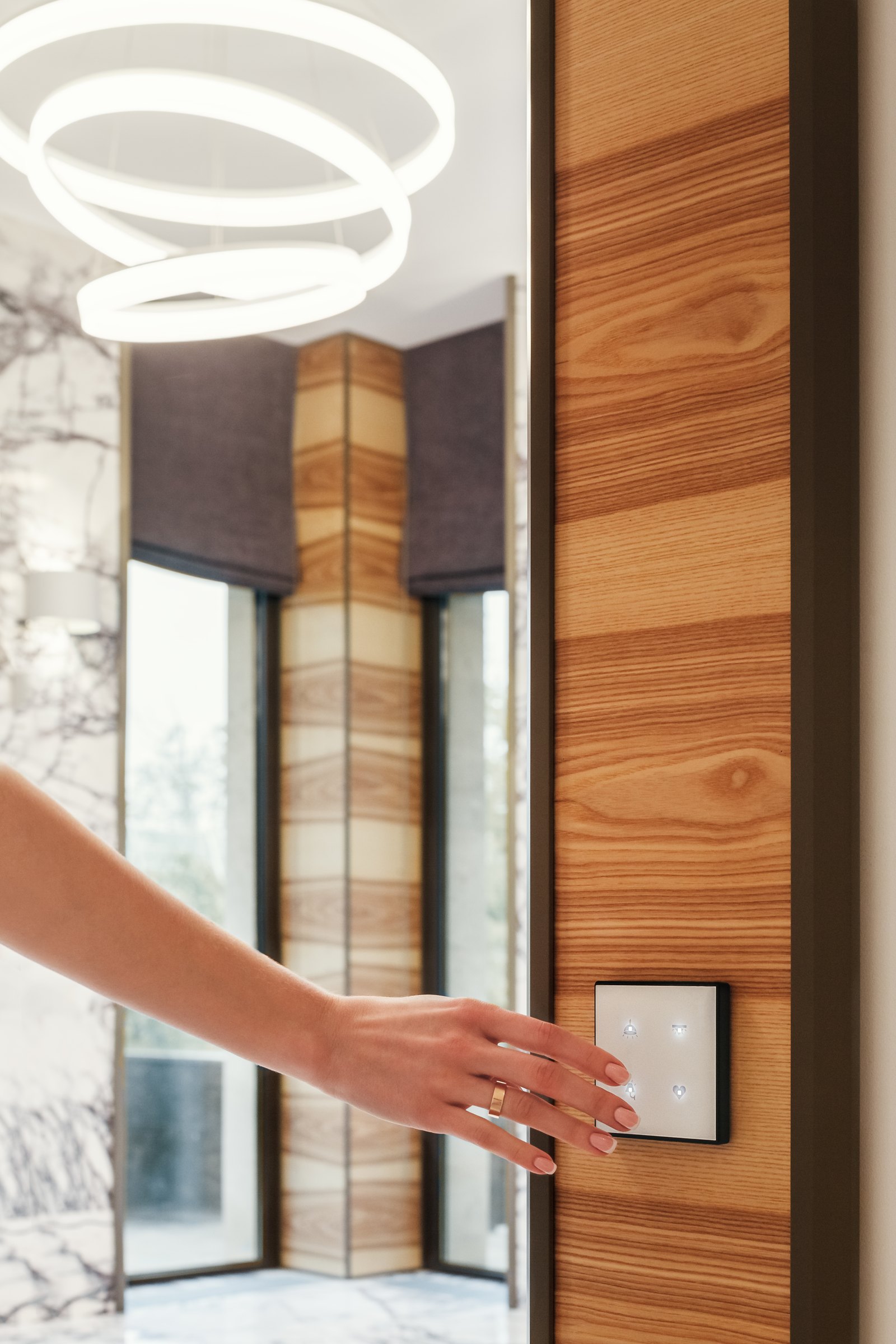
Lutron already supports Alexa and Google Home integrations across current residential systems. The lighting/shading system itself still uses Lutron’s dedicated architecture. A voice request is translated into an action the Lutron system already knows how to perform.
The practical improvement is that Alexa+ or Gemini may understand more natural phrasing. The Lutron keypad, schedules and local scenes do not become dependent on the assistant’s language model.
This is the architecture we prefer: the core system remains deterministic; AI makes one interface more flexible.
Savant already provides its own app, scenes, remotes and touch interfaces, plus voice-oriented integrations including Siri workflows and supported third-party assistants. Alexa+ or Gemini can be useful where the current Savant integration exposes the desired functions, but they remain external voice layers.
For a Savant residence, the deeper value is still that the home’s lighting, AV, shades, climate and selected security functions are coordinated inside the commissioned Savant project. AI voice can make it easier to ask for something; it does not replace the Savant programming that defines what “Goodnight” or “Entertain” actually does.
Control4 X4 already gives homeowners direct app, touchscreen, remote and current Apple HomeKit control paths, while Alexa/Google integrations provide additional voice access where supported. More capable consumer assistants can improve spoken control, but the X4 project remains the source of the room structure, routines and connected devices.
That separation is healthy. If a cloud assistant changes behavior, the family should still be able to use the Control4 interface and physical room controls.
Natural language is genuinely helpful when a request is hard to represent as one fixed button: “turn off the downstairs lights except the kitchen,” or “lower the shades in the rooms facing the afternoon sun,” where the connected platforms support that context.
For repetitive actions, a scene or keypad is still faster and more predictable. Saying a seven-word command every night is not necessarily more elegant than pressing Goodnight.
A professionally integrated home should keep security, access control, fire/life-safety functions and electrical protection in their appropriate dedicated systems. Voice can request a supported convenience action; it should not become the sole safety architecture for the property.
The same rule applies to backup power. AI may help surface information, but transfer equipment, batteries, generators and load shedding need dedicated electrical controls.
Some families use voice dozens of times a day. Others try it for a month and go back to keypads and remotes. We design differently for those households.
If voice is central, we verify the exact platform integrations, device names, room names and privacy settings during commissioning. If it is secondary, we keep the integration simple and make sure the house remains intuitive without it.
We do not design a residence around whichever AI assistant is newest. We design the lighting, shades, network, automation and security to work reliably first, then add Alexa+, Gemini for Home, Siri or other conversational interfaces where they make the experience better.
That approach lets the assistant evolve without forcing the architecture to evolve every time Amazon, Google or Apple changes a product roadmap.
For broader platform design, see our Why Simple Beats Smart article and Apple Home integration guide.
Amazon: Alexa+ availability, September 2026
Amazon: Alexa+ capabilities and privacy
Google: Gemini for Home availability and setup
Google Home Speaker built for Gemini
AI-assistant availability, subscriptions and integration capabilities change quickly. Confirm current platform documentation during project commissioning.


.svg)

© 2024 Regent5, LLC. CSLB C10 & C7 License 1033103.