
September 15, 2026
A large custom home should feel effortless to live in. Its lighting controls should be just as considered as its architecture.
Stone, plaster, millwork, decorative lighting and door hardware receive careful attention in a luxury residence. The keypad deserves a place on that same material board. It is one of the few architectural details a homeowner touches every day, and it can either interrupt a beautifully composed wall or complete it.
Lutron Aviena, Alisse, Palladiom and Sunnata offer distinctly different approaches to that detail: a traditional toggle, a softly illuminated circular button, a precise rectangular control, or a versatile wireless system keypad. MELJAC adds another direction: bespoke switching hardware integrated with Lutron HomeWorks. Their materials, wiring and system requirements are not interchangeable. [1-9]
This guide compares their current finishes, explains what belongs in the construction drawings, and shows how Regent5 approaches keypad design and installation for high-end homes in San Francisco, Atherton, Woodside, Hillsborough and the surrounding Bay Area.
Finish selections reviewed September 2026. Collections and regional availability can change; confirm the exact model, finish and current specification before ordering. Manufacturer photography illustrates products and design possibilities, not Regent5 installations.
Our recommendation is straightforward: every large new custom home should begin with a coordinated lighting-control plan. That is a design principle, not a claim that every residence is legally required to use a particular automation system.
Consider a kitchen and adjoining great room. Downlights, pendants, undercabinet lighting, shelving, artwork, coves and exterior views all contribute to the experience. Asking a homeowner to manage each circuit separately turns a carefully designed room into a daily sequence of adjustments.
A scene-based system can coordinate several lighting zones and compatible shades from one control. The keypad sends the instruction; the underlying system carries it out. The number of buttons does not have to equal the number of circuits. [2,6]
For example, we might propose Morning for breakfast preparation, Entertain for balanced light across connected rooms, Dine for a quieter evening setting, and Goodnight for shutting down selected areas while retaining an appropriate path of light. These are planning examples, not fixed scenes or promises that every connected device will respond without additional integration.
The aim is not simply fewer switches. It is fewer decisions, clearer operation and walls that remain visually composed. A guest should be able to enter a room and understand the essentials without an app or an explanation.
Aviena: our starting point for clients drawn to a heritage-style toggle and hand-finished metal.
Alisse: a strong choice when circular buttons, illuminated halos and a jewelry-like architectural detail suit the interior.
Palladiom: our preference for crisp geometry, broad buttons and a coordinated palette of metal, matte and glass finishes.
Sunnata: an option to explore when wireless communication and a broad painted-color palette fit the system plan, particularly in renovation work.
MELJAC: a compelling direction when bespoke plate details, toggles, pushbuttons and hardware coordination are central to the design. These aesthetic recommendations should be considered alongside the system distinctions below.
Aviena brings a familiar mechanical gesture into a sophisticated lighting system. Its solid-brass construction and hand-finished metal surfaces make it an appealing alternative to a conventional row of rectangular buttons. The switches are momentary, returning to center after use rather than remaining in an ordinary on/off position. [1,2]
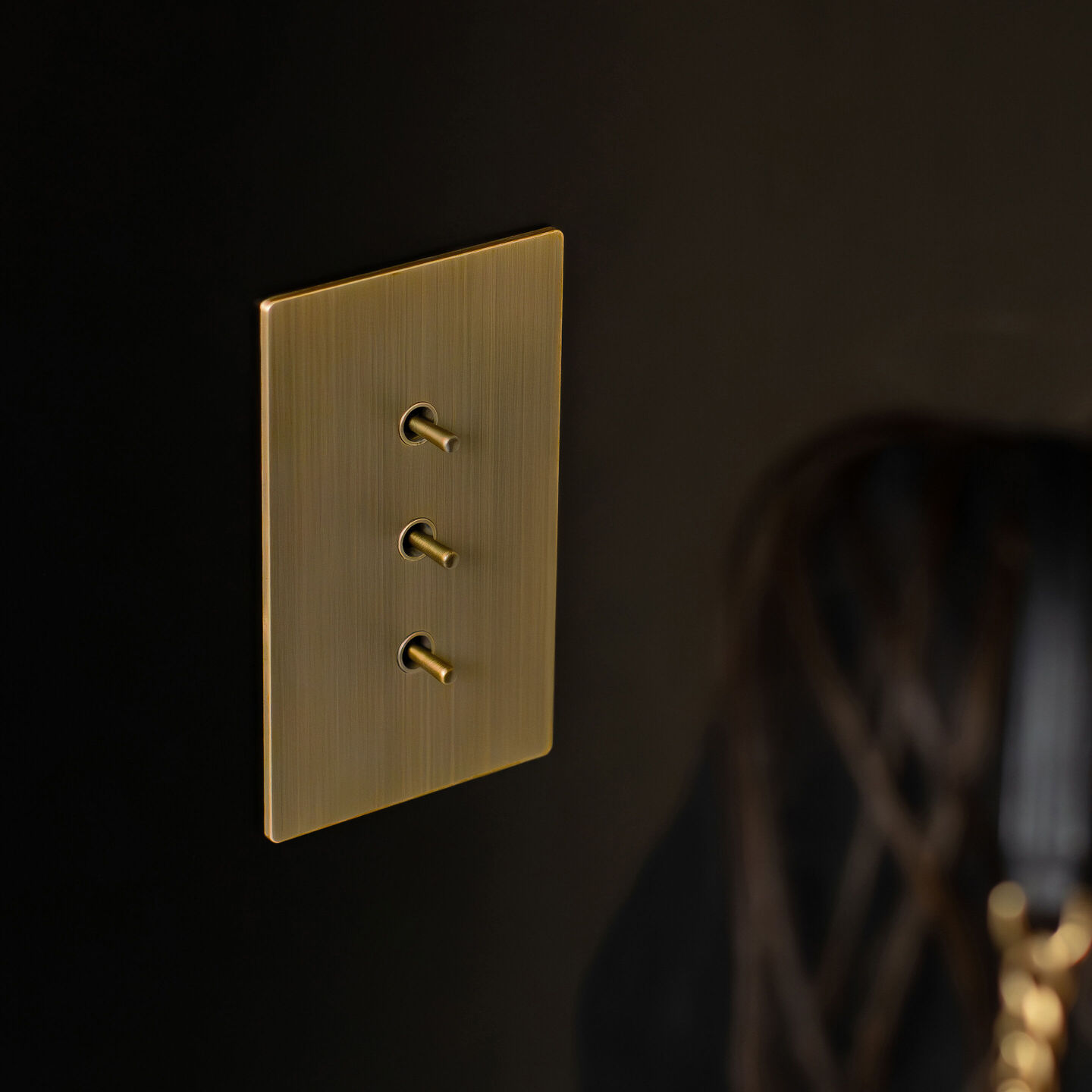
Lutron's July 2026 specification lists five finishes: Aged Brass, Aged Bronze, Brushed Brass, Satin Nickel and Bright Chrome. Aged Brass and Aged Bronze have intentional variation in hue and graining. Review a physical sample rather than expecting every plate to look identical. [2]
Our design approach is to consider Aged Brass or Aged Bronze with richly textured plaster, warm timber and more traditional hardware; Brushed Brass with softer contemporary palettes; and Satin Nickel or Bright Chrome where cooler metals form part of the room's composition. A contrast can be deliberate, but an almost-match rarely looks deliberate.
Aviena is designed for HomeWorks QSX through the wired QS link, using its specified Lutron interface and wiring harness. It offers one- to four-toggle arrangements across selected square and rectangular formats. Its European-style backboxes must be coordinated before rough-in; it is not a decorative replacement that can be assumed to fit any existing switch box. Quick and extended toggle actions are programmed for the project. [2]
For an Aviena installation, settle the everyday action of each toggle early. We favor clear engraving and a restrained number of gestures over a beautiful plate that requires the household to memorize hidden functions.
Alisse takes a different approach to tactile control. Circular buttons sit within a hand-finished brass faceplate, with illuminated halos providing a visual indication of operation. Custom text or icons can make lighting and shade scenes feel like part of the interior rather than a layer of technology added afterward. [3]
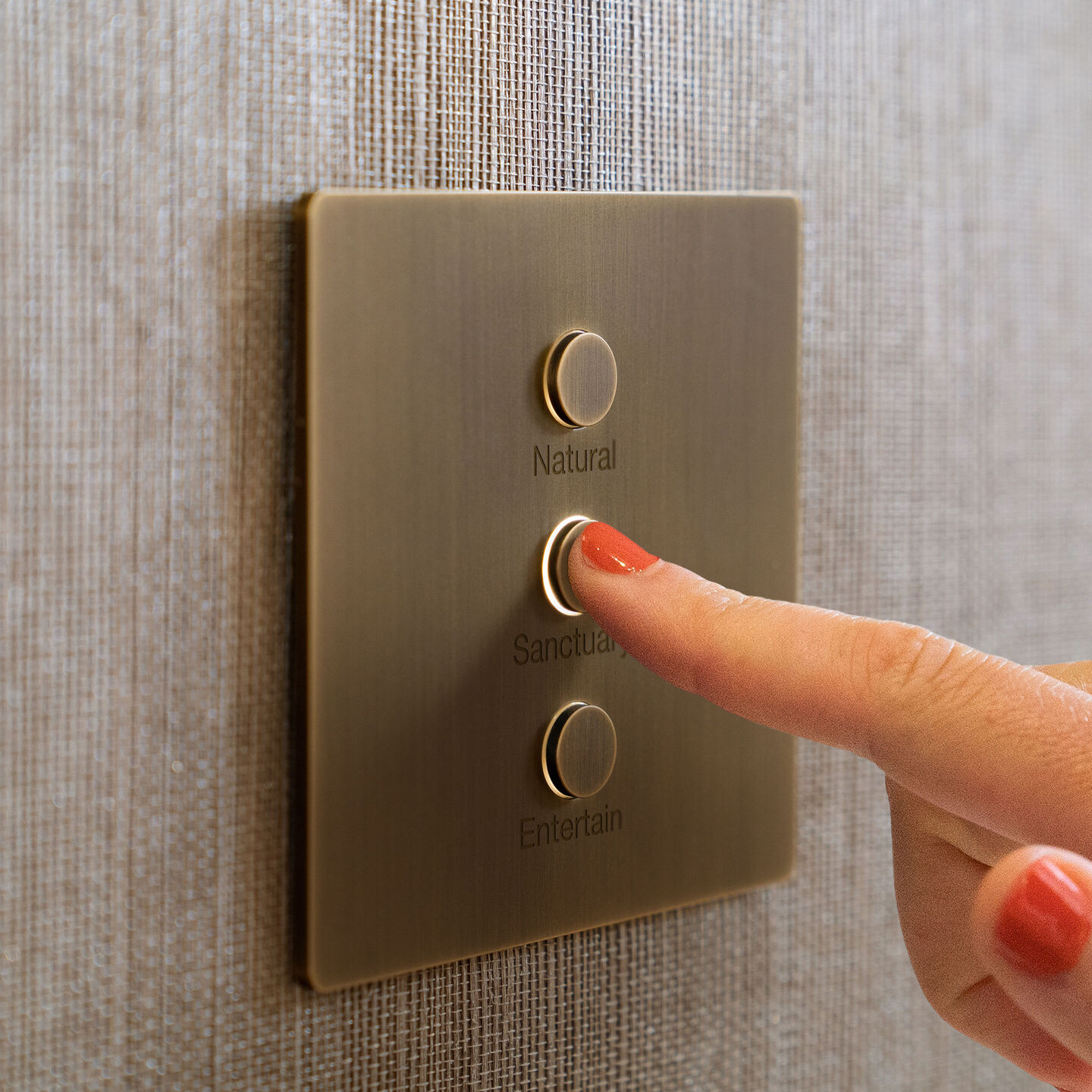
Seven Signature Metal finishes: Aged Brass, Aged Bronze, Brushed Brass, Satin Nickel, Bright Chrome, Graphite and Champagne.
Four matte finishes: Snow White, Matte Black, Architectural White and Brilliant White. The current selection is eleven finishes in total; the painted matte choices should not be confused with exposed-metal finishes. [3]
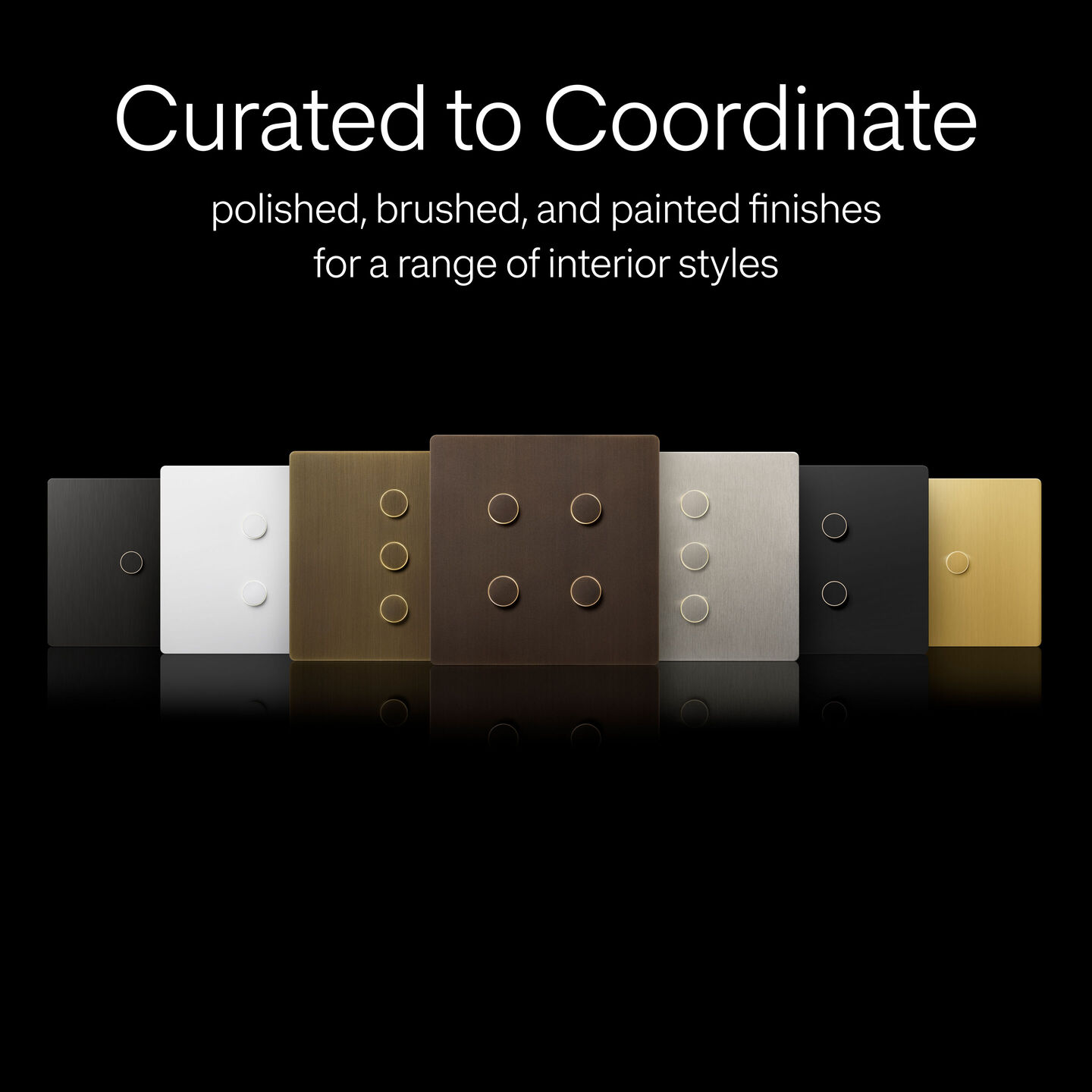
We would consider Champagne for an understated warm-metal accent and Graphite where darker hardware needs to feel quieter than a highly reflective finish. On pale walls, compare the actual white samples against the final plaster or paint. A finish name alone is not a reliable color-matching specification.
Alisse uses low-voltage QS wiring for HomeWorks. Its separate base and decorative front support a staged installation, protecting the finished keypad while construction continues. Selected rectangular, three-column configurations accommodate up to nine buttons. The appropriate backbox, front configuration and engraving should be resolved as one assembly. [3,10]
On an Alisse installation, we would review the wall elevation at full scale. The right combination of plate size, button count and white space is more important than automatically specifying the smallest plate in every room.
Palladiom suits interiors where a control should read as a clean architectural plane. Its broad rectangular buttons sit flush with the faceplate, and button and plate materials are coordinated. Backlit engraving adjusts to ambient conditions. Here, flush describes the relationship between the buttons and faceplate; it does not mean every installation is recessed flush with the surrounding wall. [4]
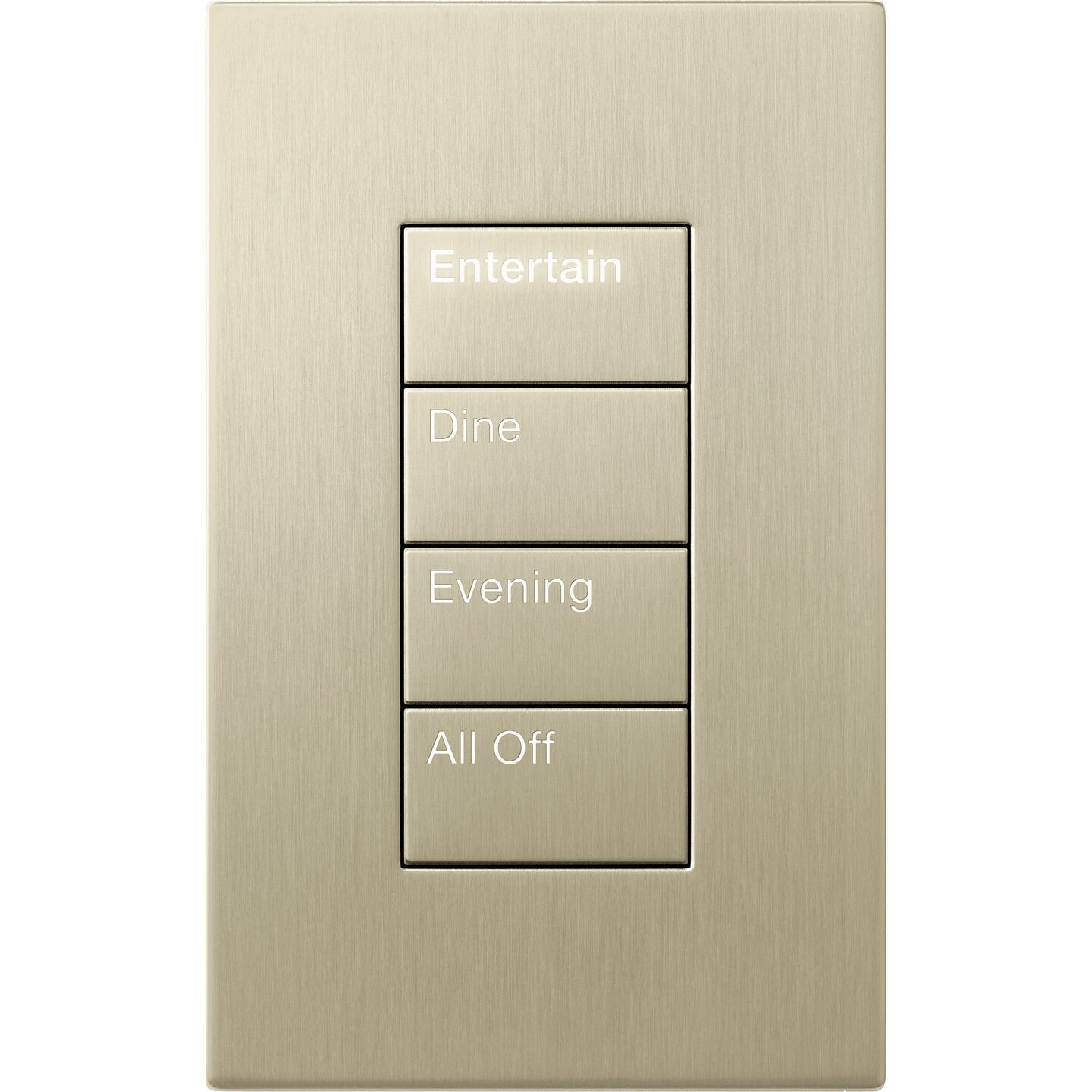
Palladiom's current palette includes Champagne (CP) and Graphite (GP), alongside its established architectural metals. These are especially worth comparing when a project also uses Alisse. Graphite is not Polished Graphite (PG); the separate names and codes matter when preparing a finish schedule. [4,5]
Architectural matte: White, Ivory, Beige, Almond, Light Almond, Taupe, Sienna, Brown, Gray and Black.
Architectural metals: Bright Brass, Bright Chrome, Bright Nickel, Polished Graphite, Antique Brass, Satin Brass, Satin Chrome and Satin Nickel.
Signature metals: Champagne and Graphite.
Glass: Clear White Glass and Clear Black Glass. These twenty-two finish options are shown across Lutron's current selection and May 2026 Palladiom brochure. Verify availability for the particular shape and system version being specified. [4,5]
Our recommendation is to compare more than color. A reflective metal, a glass surface and a matte polymer can have very different visual weight even in a similar tone. On a stone wall, review the keypad beside the actual slab sample, not only a photograph of the room.
The residential HomeWorks keypad uses wired QS communication. Available arrangements include two buttons, three buttons, three with raise/lower, and four buttons. Resolve the desired local adjustment before selecting the layout: a dedicated raise/lower control can be more understandable than assigning every action to a scene button. [4]
When a home is already finished, the ideal control strategy may be the one that preserves its walls. Sunnata system keypads use Lutron's Clear Connect Type X radio communication and offer large buttons with slim LED indicators. There are separate versions for RadioRA 3 and HomeWorks; appearance alone does not establish compatibility. [6,7,16]
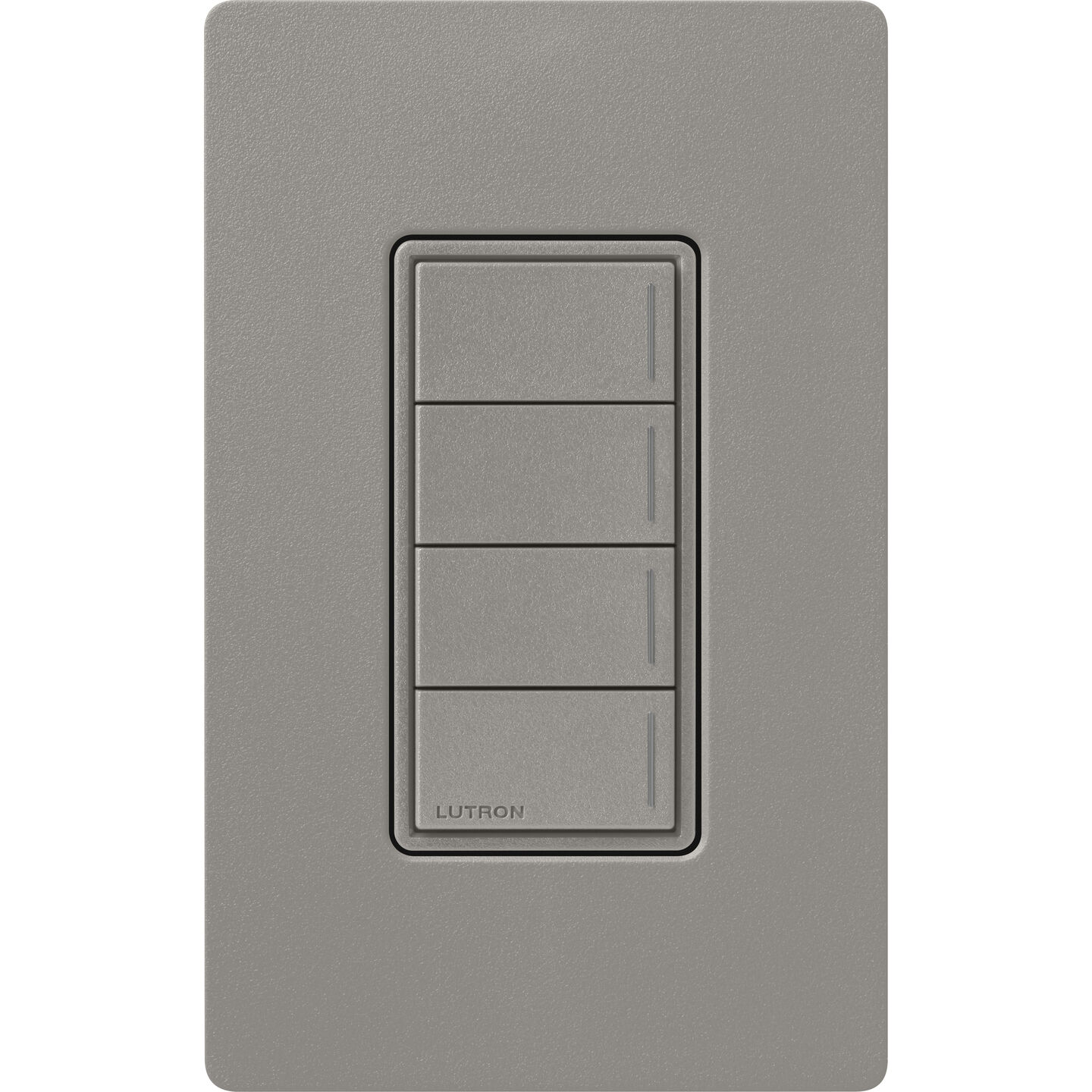
RRST identifies the RadioRA 3 keypad family, including the RRST-W4B-WH example. HRST identifies the HomeWorks keypad family. A RadioRA 3 keypad should not be ordered as a substitute for its HomeWorks counterpart. [6,7,16]
RF does not mean battery-powered or wiring-free. The standard HomeWorks Sunnata keypad requires hot and neutral power connections. Radio communication replaces a dedicated control-data cable, not the electrical supply. An electrician must confirm the actual box and wiring conditions, while the integrator designs the RF network. [6,16]
A system keypad also differs from a Sunnata dimmer and from a hybrid keypad/dimmer. Those products have different functions and load requirements. For a remodel, we would first decide which existing circuits remain locally controlled, then select the appropriate devices rather than treating every Sunnata product as interchangeable.
Four gloss finishes: White, Ivory, Light Almond and Black.
Twenty satin finishes: Brilliant White, Glacier White, Snow, Architectural White, Lunar Gray, Mist, Pebble, Cobblestone, Slate, Midnight, Biscuit, Sand, Taupe, Pumice, Clay, Sage, Espresso, Truffle, Deep Sea and Signal Red. These are colored finishes, not the metal or glass offerings found elsewhere in the guide. [6,7,16]
For a painted room, we would begin with the quietest complementary tone. Sage or Deep Sea may also be worth considering where the control is intended to participate in the color scheme. Wireless control is a design tool, not automatically a lesser option; its suitability depends on the building and the system plan.
Regent5 is a MELJAC dealer and installer, and we integrate appropriately specified MELJAC switching with Lutron HomeWorks. This gives architects, designers and homeowners another way to reconcile the feel of traditional hardware with a contemporary lighting-control system.
MELJAC's keypad collections include Classique, Damier, Ellipse and Solaris. Depending on the collection and plate, a project can explore different combinations of toggles, pushbuttons, engraving and edge or fixing details. Treat the selection as architectural hardware, not merely a choice between white and black plastic. [8,11]
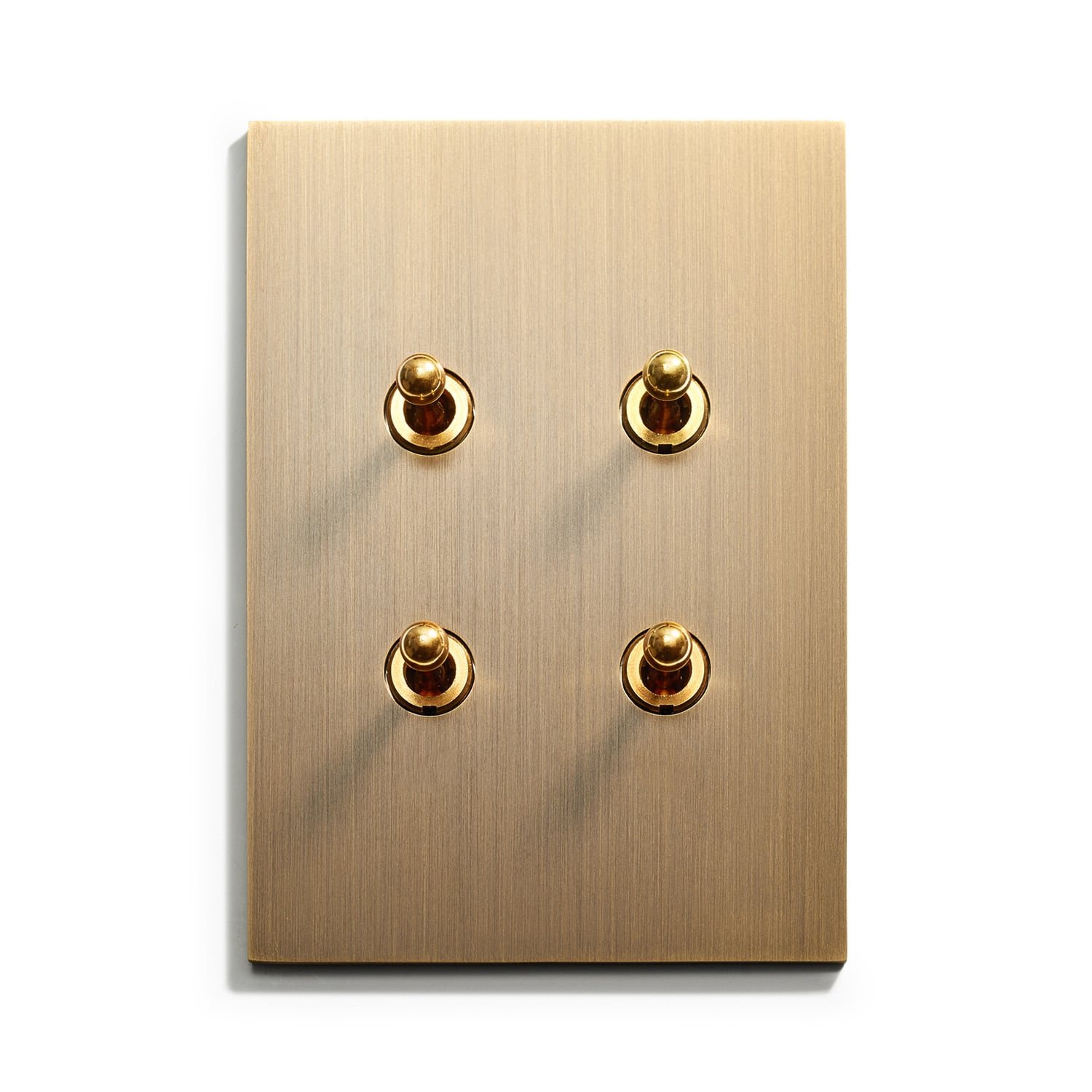
MELJAC offers a broad hand-finished palette, with examples including Brushed Nickel, Polished Nickel, Brushed Brass, Antique Brass, Dark Bronze, Belgian Gunmetal and Satin Copper. Its North American LA Finish Collection adds unlacquered living finishes intended to develop a patina. Custom finish coordination is also available subject to manufacturer review. [12]
Our advice is to decide whether change over time is welcome. A living finish may be exactly right beside unlacquered door hardware; another client may prefer a more consistent appearance. Review both the plate and the operating mechanism, because a matching toggle finish is not available for every combination. [11,12]
The MELJAC controls send low-voltage dry-contact signals to a suitable Lutron contact-closure interface, which communicates with the lighting system. This is an engineered interface arrangement, not a universal direct connection for any decorative switch. Lutron's QSE-CI-WCI is one documented example of a contact-closure interface; the exact hardware and system-generation compatibility must be confirmed for the project. [9,13]
Momentary pushbuttons and return-to-center toggles can support different control strategies. Crucially, MELJAC notes that combining on/off and directional raise/lower on a toggle in Lutron can require significant conditional programming. The interaction should be demonstrated and approved before it is repeated throughout a residence. [9]
Illumination is a separate design decision. MELJAC identifies additional power and wiring requirements for illuminated options and does not recommend assuming HomeWorks QSX scene-feedback behavior from that illumination. A glowing button is not necessarily reporting the system's current state. [9]
We recommend reviewing the control sequence, interface allowance, backbox, finish and engraving together. Neither the MELJAC low-voltage keypad nor its contact-closure interface should be treated as a conventional mains-voltage switch. [11,13]
Start with one question: should the keypad disappear, coordinate, or become a deliberate accent? That decision gives the sample review a purpose.
For a quiet installation, compare the keypad against the finished wall material and consider its sheen as well as its color. For coordination, review it beside door handles, cabinet pulls, plumbing trim and decorative fixtures. For a deliberate accent, let the keypad have its own material presence without adding competing finishes nearby.
We recommend checking samples in daylight and under the proposed evening lighting. Review engraving legibility and illuminated indicators from the expected approach to the room. The most attractive sample on a desk is not always the most usable control on a dim bedroom wall.
Include receptacles, thermostats, shade controls and other visible devices on the same elevation. Matching names do not guarantee matching surfaces across manufacturers or collections. Approve physical samples and model codes; do not authorize an entire house from a small screen swatch.
Mixing families can be intentional. A formal room might call for Alisse or MELJAC, while another part of the residence favors Palladiom or an appropriate HomeWorks Sunnata device. We would keep engraving language and everyday behavior consistent even when the hardware changes.
A beautiful faceplate cannot correct an incomplete lighting plan. Before ordering controls, the project needs a coordinated schedule of lighting zones, fixture and driver requirements, shade groups, control locations and desired scenes.
For a large new residence, we recommend evaluating a centralized or hybrid strategy early. Centralized load control can move much of the switching and dimming equipment away from principal walls; a hybrid approach retains appropriate local devices where the project calls for them. The design should follow the architecture and electrical scope rather than a blanket preference for wired or wireless hardware. Explore Regent5's Lutron HomeWorks QSX design and installation services.
Keypad selection and lighting quality are related but separate decisions. A premium control does not change the dimming performance or color capabilities of an ordinary fixture. Projects considering Lutron Ketra lighting should coordinate the luminaires, system components and scenes alongside the visible controls.
Likewise, an existing HomeWorks system needs a compatibility review before new keypads are ordered. The presence of a Lutron nameplate does not establish the processor generation, wiring suitability or upgrade scope.
Walk through arrival, cooking, entertaining, bedtime and guest use. Mark controls on the drawings and decide what each should do. In a primary suite, consider whether a bedside control should affect the bedroom alone or selected areas beyond it.
Bring the lighting designer, electrician and integrator together before equipment is purchased. We recommend documenting each load, its intended control method and the system equipment required. Reserve sensible equipment locations and service access instead of leaving those decisions until the finishes are installed.
Aviena, Alisse, Palladiom, Sunnata and MELJAC do not share a universal mounting arrangement. Specify the actual assembly, orientation and box before rough-in. Coordinate final plaster, stone, tile and millwork thickness, and use a mockup where an unusually detailed wall demands it. Follow the current product instructions rather than a generic switch-box detail. [2,3,4,6,9]
For wired controls, coordinate the required low-voltage routes with the system design. For RF devices, review coverage, processor or gateway placement and the actual building materials. Existing electrical wiring must be checked independently of radio coverage. These are installation tasks for the qualified electrical and integration team, not a cosmetic hardware swap.
Keep decorative fronts out of avoidable construction damage. Agree on plain-language labels, capitalization and button behavior before final engraving is released. We recommend an engraving schedule that can be checked room by room, with any manufacturer ordering deadlines incorporated into procurement.
Review the completed scenes in the actual rooms, including after dark. Test lighting transitions, shade actions and the approved gestures. Demonstrate daily use to the household, document the final assignments, and establish how future adjustments and service will be handled.
Regent5's preconstruction and low-voltage engineering work brings these decisions into the project before they become field corrections. Our interior designer coordination resources address the visible details alongside the technical scope.
A useful keypad proposal should separate the visible hardware from the work that makes it function: controls and interfaces, wiring, mounting details, system equipment, engraving, programming, commissioning and support. A price for one decorative front is not a price for a completed room.
We recommend comparing defined scopes rather than isolated product prices. For custom finishes and engraved hardware, confirm current availability and production timing before the construction schedule depends on them. The most expensive correction may be reopening a finished wall, not choosing a different metal.
Regent5 helps homeowners, architects and interior designers coordinate Lutron keypads and finishes with the electrical, lighting and technology plan. Our work includes HomeWorks system design, keypad installation, programming and support, with MELJAC dealer supply and integration for projects seeking bespoke switching. [14]
For Lutron Aviena or Alisse installation in Atherton, Woodside, Portola Valley, Hillsborough, Menlo Park, Palo Alto, Los Altos Hills or San Francisco, the conversation should begin with the plans and the material palette, not simply a product number.
Our Northern California coverage also includes the South Bay, San Jose, Saratoga and Los Gatos; Marin; Napa and Sonoma; and Carmel and Pebble Beach. Select project coverage extends through Santa Barbara, Los Angeles and Orange County. See our services and regional coverage. [15]
Planning a new home or substantial renovation? Arrange a lighting-control and keypad consultation with Regent5. Bring the architectural plans, lighting schedule and proposed hardware finishes. We will help define a control approach that feels as considered as the home itself.
A dimmer controls a lighting load. A system keypad issues programmed commands that can coordinate multiple zones or scenes. Some hybrid products combine functions, so the exact device matters; a keypad-only model should not be assumed to dim a circuit directly. [6]
No. Aviena's traditional appearance conceals a HomeWorks QSX control arrangement with a specified interface, QS wiring and mounting requirements. It should be designed into the system, not ordered as a like-for-like mains switch replacement. [1,2]
Different styles can be considered within an appropriately designed HomeWorks project. Specify HomeWorks-compatible devices and the necessary links and infrastructure; the RadioRA 3 version of Sunnata is not interchangeable with the HomeWorks version. [3,4,6,7]
Yes, through a properly specified contact-closure interface and programming. Button behavior, toggle dimming, illumination and feedback need explicit design review rather than assumptions based on the appearance of the keypad. [9,13]
Not necessarily. We recommend a coordinated approach rather than forced uniformity. A finish can follow a room's material palette while the labels and control behavior remain consistent throughout the home.
We recommend involving the integrator during design development, before electrical rough-in and final wall details. Confirm the system and mounting requirements early, then coordinate finish and engraving approvals with procurement.
1. Lutron Aviena product collection.
2. Aviena specification 3691310b, July 17, 2026.
3. Lutron Alisse collection and finish selection.
4. Lutron Palladiom collection.
5. Palladiom brochure, May 2026, revision O.
6. HomeWorks Sunnata keypad specification 3691205.
7. RadioRA 3 Sunnata keypad collection.
8. MELJAC North America keypad collections.
9. MELJAC system integration guidance.
10. Lutron Alisse rectangular three-column configuration.
11. MELJAC Classique options and installation information.
12. MELJAC finishes and custom elements.
13. Lutron QSE-CI-WCI interface specification.
14. Regent5 HomeWorks services.
15. Regent5 services and regional coverage.
16. HomeWorks Sunnata current product selection.
All product names and images belong to their respective owners. Photography: Lutron Electronics and MELJAC North America. Final product compatibility, finishes and installation requirements are subject to the current manufacturer documentation and project-specific review.


.svg)

© 2024 Regent5, LLC. CSLB C10 & C7 License 1033103.