
Regent5 is a certified Lutron dealer, a Conrad dealer, and an Insolroll dealer, and a C10 and C7 licensed contractor, CSLB License 1033103. We design, install, and service Lutron motorized shading and drapery for estates in Atherton, Woodside, Portola Valley, Hillsborough, Los Altos Hills, Los Altos, Menlo Park, Palo Alto, and San Francisco. Sivoia QS is the wired shading platform, engineered so that a run of shades moves together and stops together rather than drifting out of alignment across a wall of glass. Fabrics come from the Lutron collections including Satine, Boucle, Hachure, and Stria, in translucent, room darkening, and blackout weights. Shade selection is made against the room, the orientation, and the light you actually get, not from a sample card under showroom lighting.
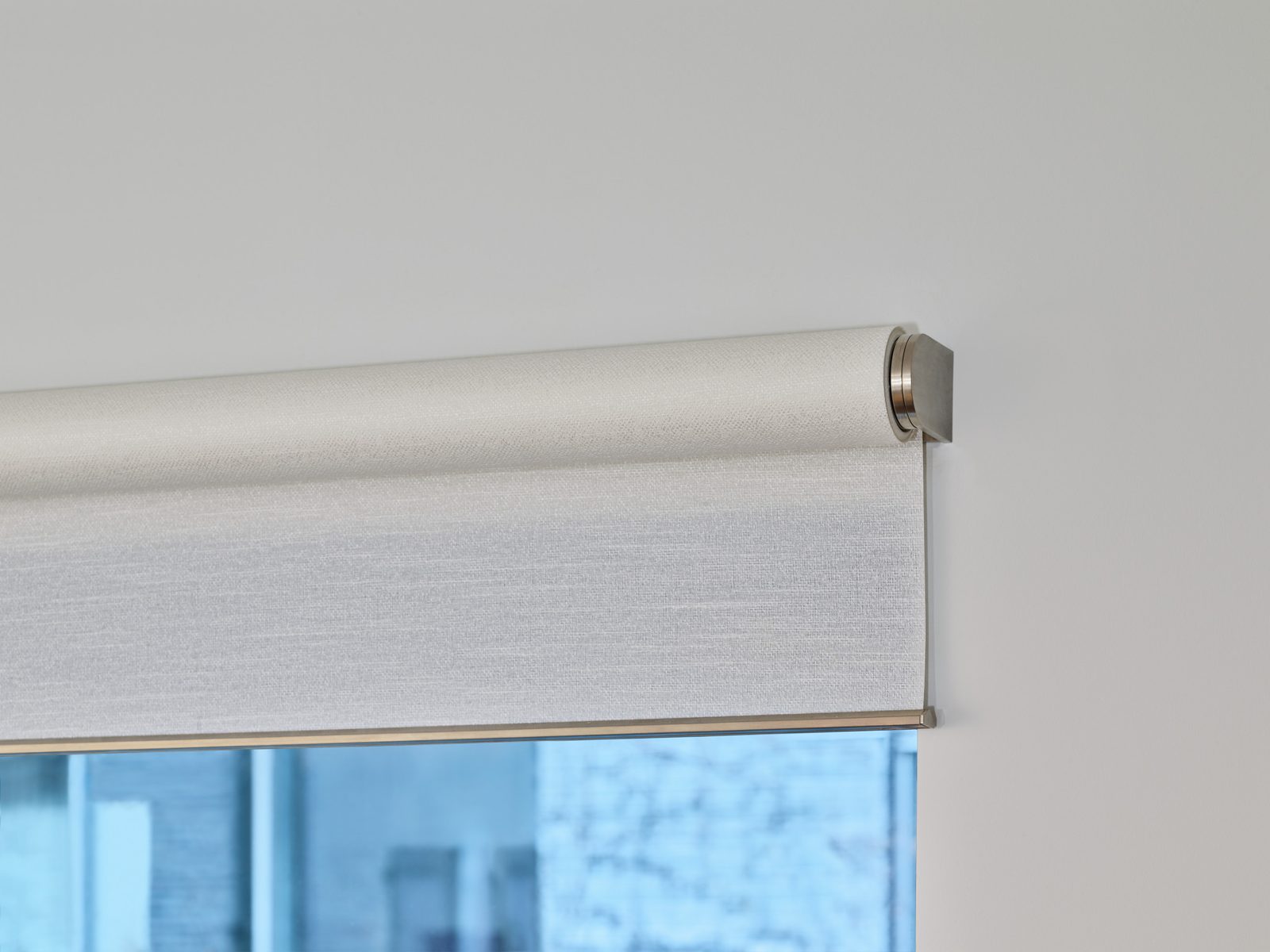
Palladiom shading is designed to be seen. Where a conventional roller shade is hidden in a pocket, Palladiom exposes the roller and the hardware as a finished architectural element, machined in metal finishes that coordinate with Palladiom keypads and thermostats. That makes it the right specification when a shade pocket is not possible, when the ceiling detail will not accommodate one, or when the designer wants the hardware to read as part of the room. Palladiom also works with RadioRA 3, HomeWorks QS, and HomeWorks QSX, so it can be specified on both new construction and retrofit.
Roman shades hold a soft fold rather than rolling flat, which suits bedrooms, studies, and rooms where the window treatment is meant to read as fabric rather than as hardware. Regent5 is a Conrad dealer, and Conrad is where this category gets interesting. Conrad handweaves window coverings from natural fibers, with over one hundred original designs, and the company is part of the MillerKnoll collective. Conrad offers Roman shades, roll-ups, and sliding panels, along with specialty work most manufacturers decline: corner and bay windows, arched and angled openings, and French doors. Conrad motorizes with Lutron, so a handwoven Conrad Roman shade sits on the same keypad, the same scene, and the same schedule as every other shade in the house. For interior designers, that is the combination that usually decides the specification.
Lutron drapery tracks carry custom drapery on a motorized track, so heavy fabric opens and closes on a scene or a schedule without anyone pulling a cord. The track is specified to the fabric rather than the other way around: weight, stack depth, fullness, and whether the treatment draws from one side or splits at the center all change the hardware. Drapery is where coordination matters most, because the track has to be in the ceiling detail before the ceiling is closed. We work from the interior designer's fabric selection and the architect's ceiling section, and we tell both what the pocket has to accommodate while it can still be changed on paper. Drapery is frequently paired with a shade on the same window, a sheer or solar shade for daytime glare control behind drapery that closes at night, both on the same control system.
Hardware gets specified early and fabric gets chosen late, usually under time pressure, often from a handful of samples someone happened to bring. That is the wrong way round. The motor and the bracket determine whether a shade works. The fabric determines what the room looks like for the next fifteen years.
Lutron maintains a dedicated fabric portfolio with seven collections, and most owners have never been told it exists. Samples can be ordered and reviewed before anything is committed, and we do that as a matter of course rather than as an upgrade.
Atelier
The collection most of our estate work draws from. Textured weaves including Matrice, Stria, Bouclé, Satine, and Hachure, in blackout and sheer, in colourways such as Shark, Mink, Chinchilla, and Silver.
Gallery
A curated range where the fabric is intended to be noticed as a material rather than to recede.
Classico
Traditional weaves and colourways, suited to period rooms and to houses where the shade should not announce itself as contemporary.
Architectural Honeycomb
Cellular construction for insulation as well as light control. Relevant on west elevations and on glass that drives cooling load.
Roller Essentials
A working range for secondary rooms, where the specification needs to be sound without being precious.
Honeycomb Essentials
Cellular fabrics at the same level, for the same rooms.
Beyond the collection, three properties decide how a fabric behaves and they are worth understanding before choosing on appearance alone. Openness factor governs how much you see through it: a one percent weave preserves privacy and kills glare but closes the view, a five or ten percent weave keeps the view and lets more light through. Colour changes the character of the light entering the room, since a dark weave reads as a crisp silhouette against bright glass while a light weave diffuses and brightens. Blackout against sheer is a room-by-room decision, not a house-wide one.
We bring samples to the actual window, in the actual light, at the time of day the room is used. A fabric chosen under showroom lighting frequently disappoints on a north elevation in February. That visit costs nothing and prevents the single most expensive mistake in a shading package, which is a fabric that has to be remade after installation.
A house rarely wants the same treatment at every window. Sivoia QS carries roller shades, Roman shades, drapery, tensioned and cable-guided shades, wood blinds, and horizontal sheer blinds on one control system, which means the choice can be made window by window rather than compromised house-wide.

Drapery and shade at one window
Two layers on independent tracks. The shade handles glare and heat through the day, the drapery closes the room in the evening. Either can move without the other.
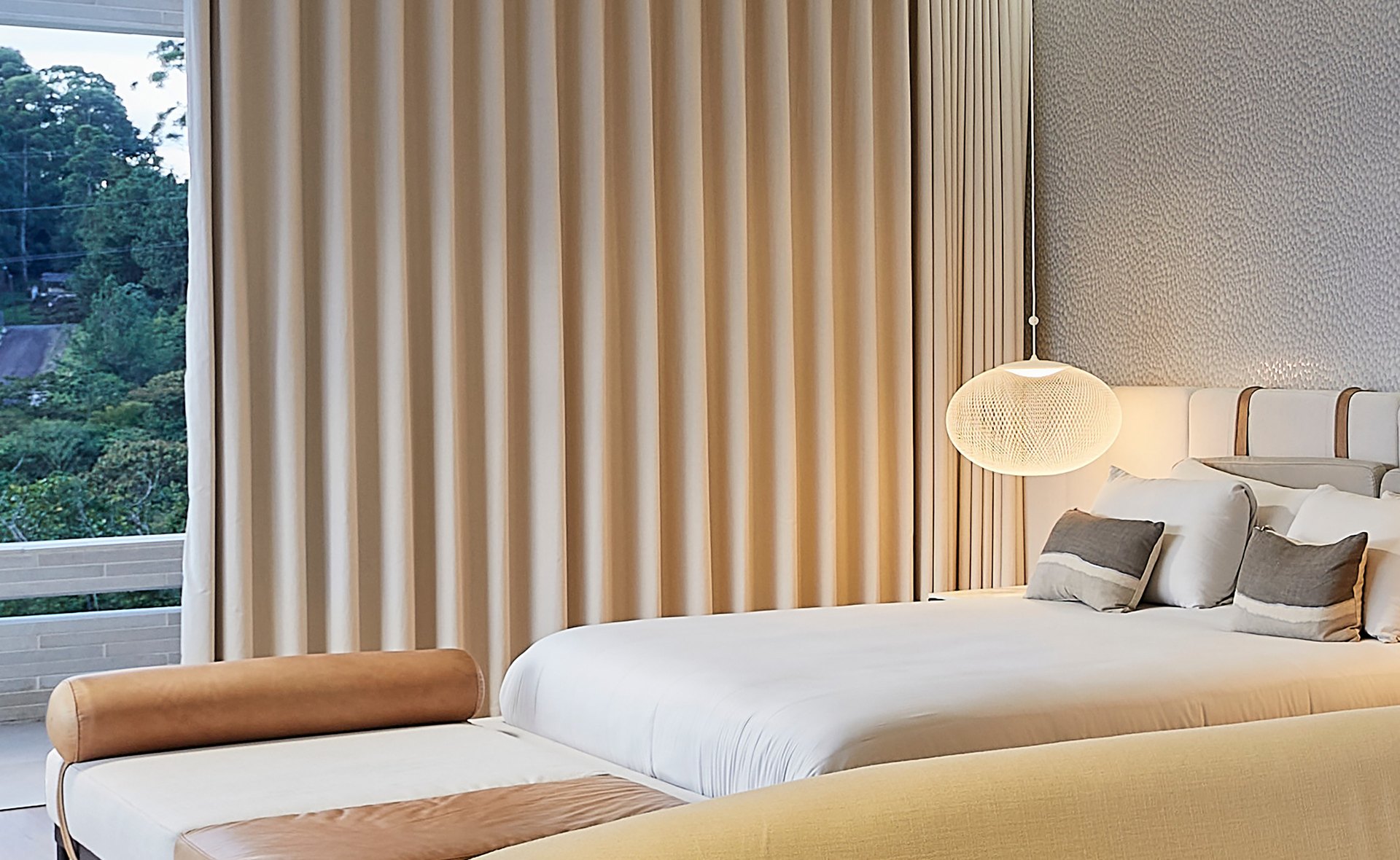
Full height drapery
Where the window is the wall. Track length, stack depth at the ends, and pleat spacing are decided against the architecture, not ordered from a size chart.
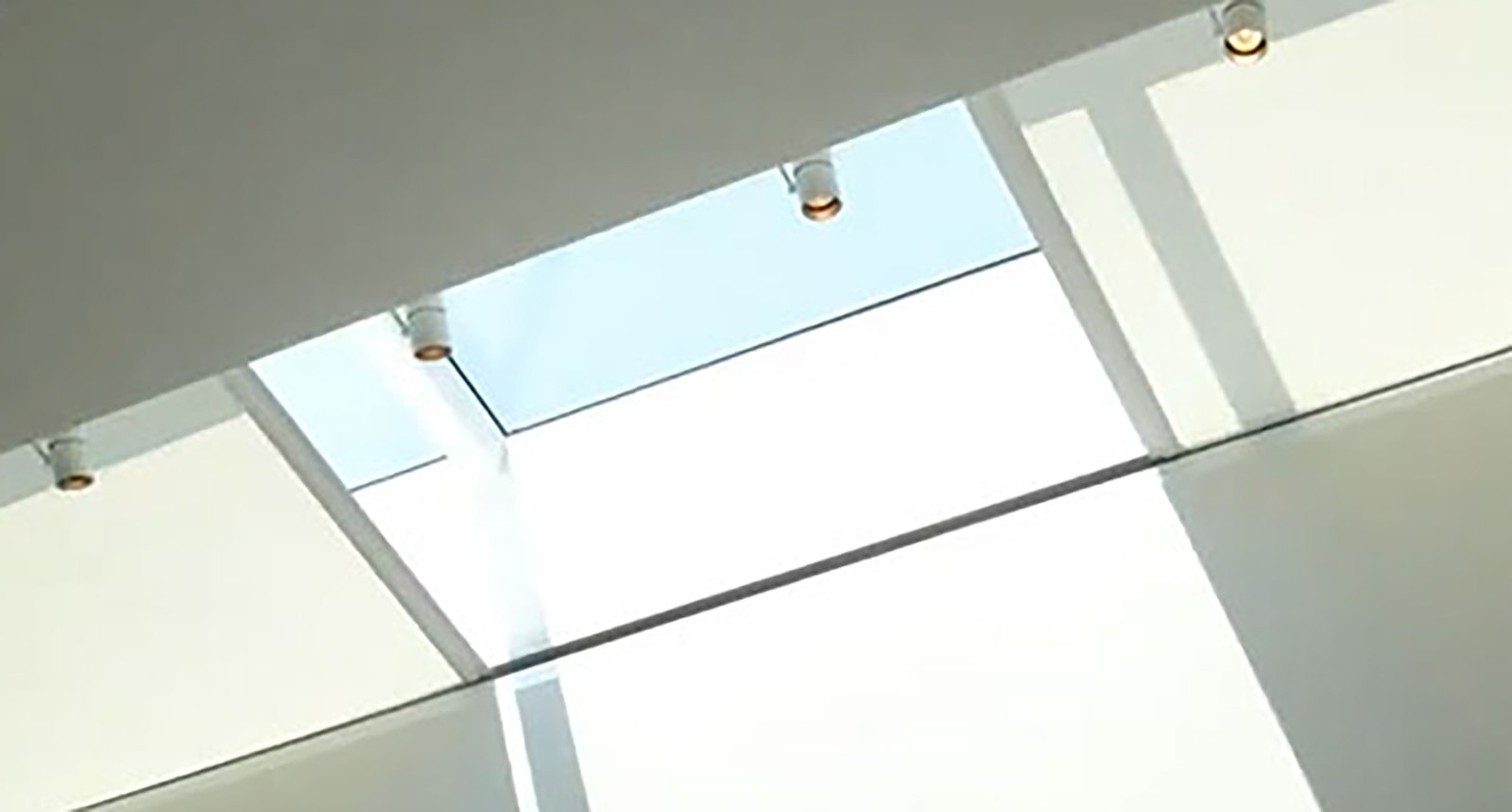
Tensioned and cable guided
Skylights and raked glazing, where gravity works against a conventional shade. Common on Peninsula houses with clerestory or roof glazing that overheats every afternoon.
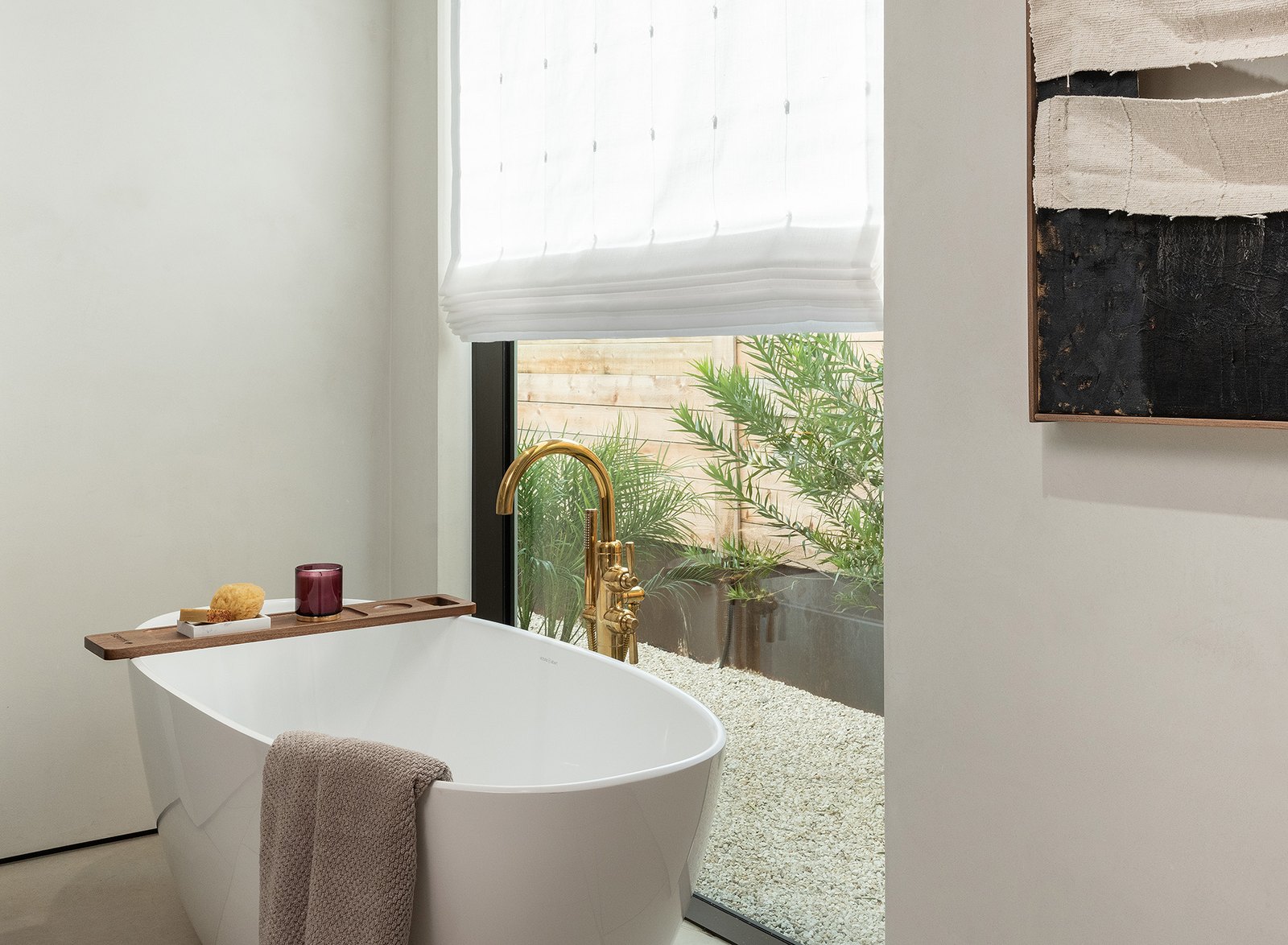
Roman shades
Where a roller would read as too technical. The fold structure gives softness in a room that is otherwise hard surfaces, and it takes the same fabrics.
Regent5 is an Insolroll dealer, and exterior shading is the most effective solar control available on a house. An interior shade stops light after it has already passed the glass and become heat in the room. An exterior shade stops it at the outside face of the window, blocking up to 97 percent of heat and UV before it enters. On west facing glass in Atherton and Woodside, and on exposed hillside elevations in Portola Valley and Los Altos Hills, that difference is measurable in both comfort and cooling load. Insolroll Oasis exterior shades run the Lutron Roller 300 electronic drive unit, so they operate from the same system as the interior shades. We have driven Insolroll exterior shades from both HomeWorks QS and HomeWorks QSX. The 2700 and 2800 use cable guided or track guided fabric, while the 2900 and 2950 use a zipper captured system that holds the fabric taut in side tracks and keeps insects out, which is the specification for a covered terrace or an outdoor room. Headbox comes in white, bronze, tan, and black.
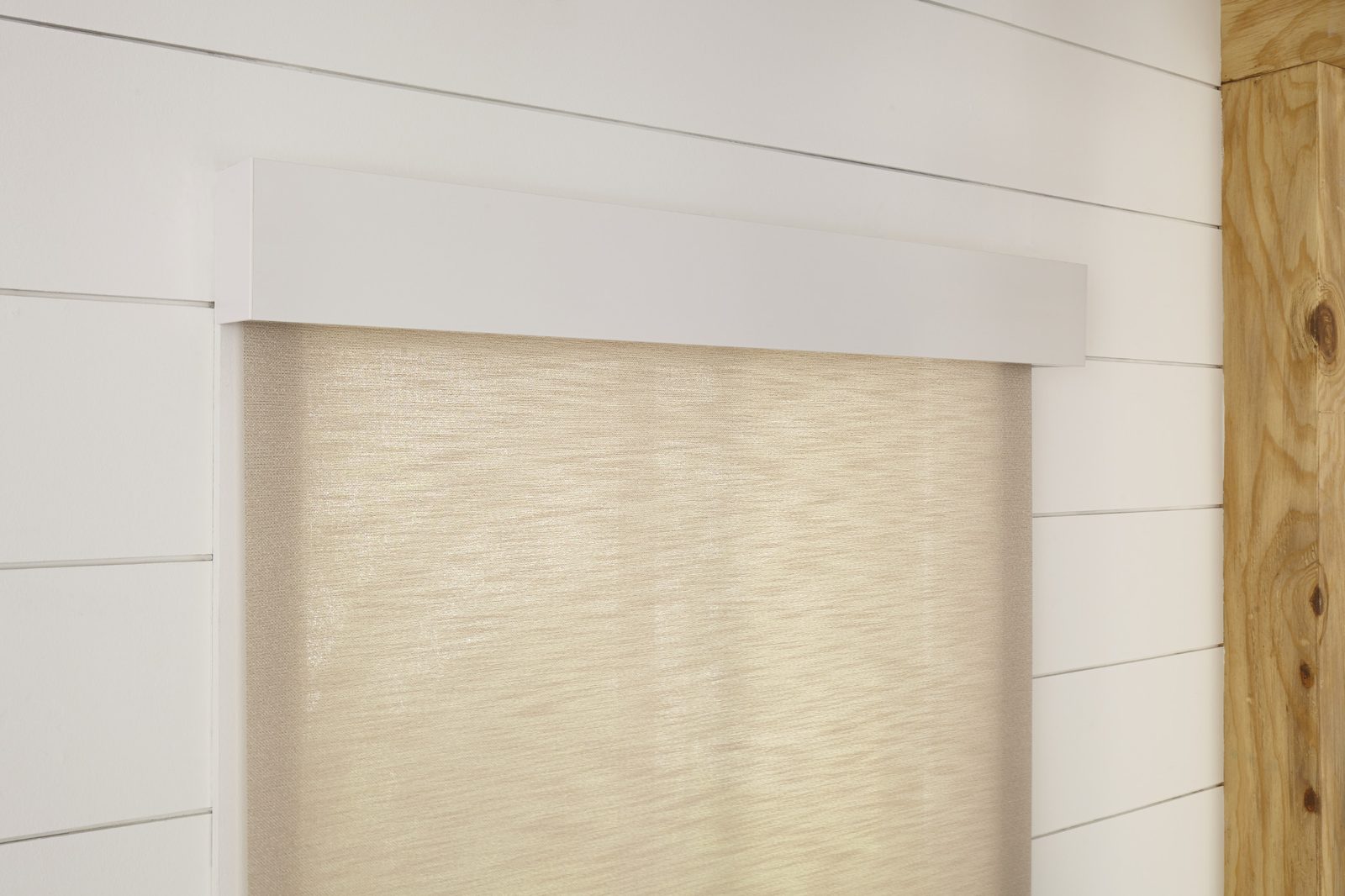
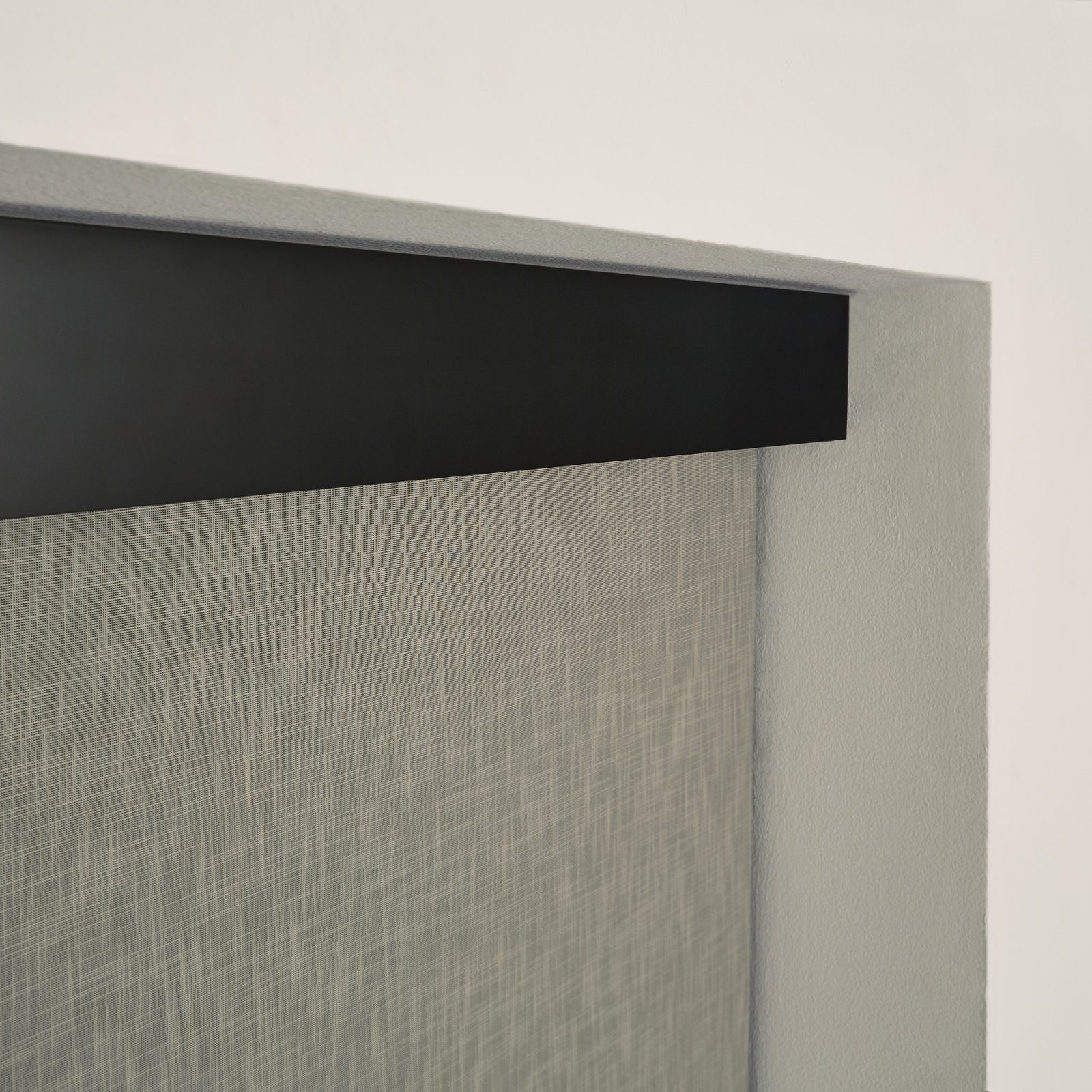
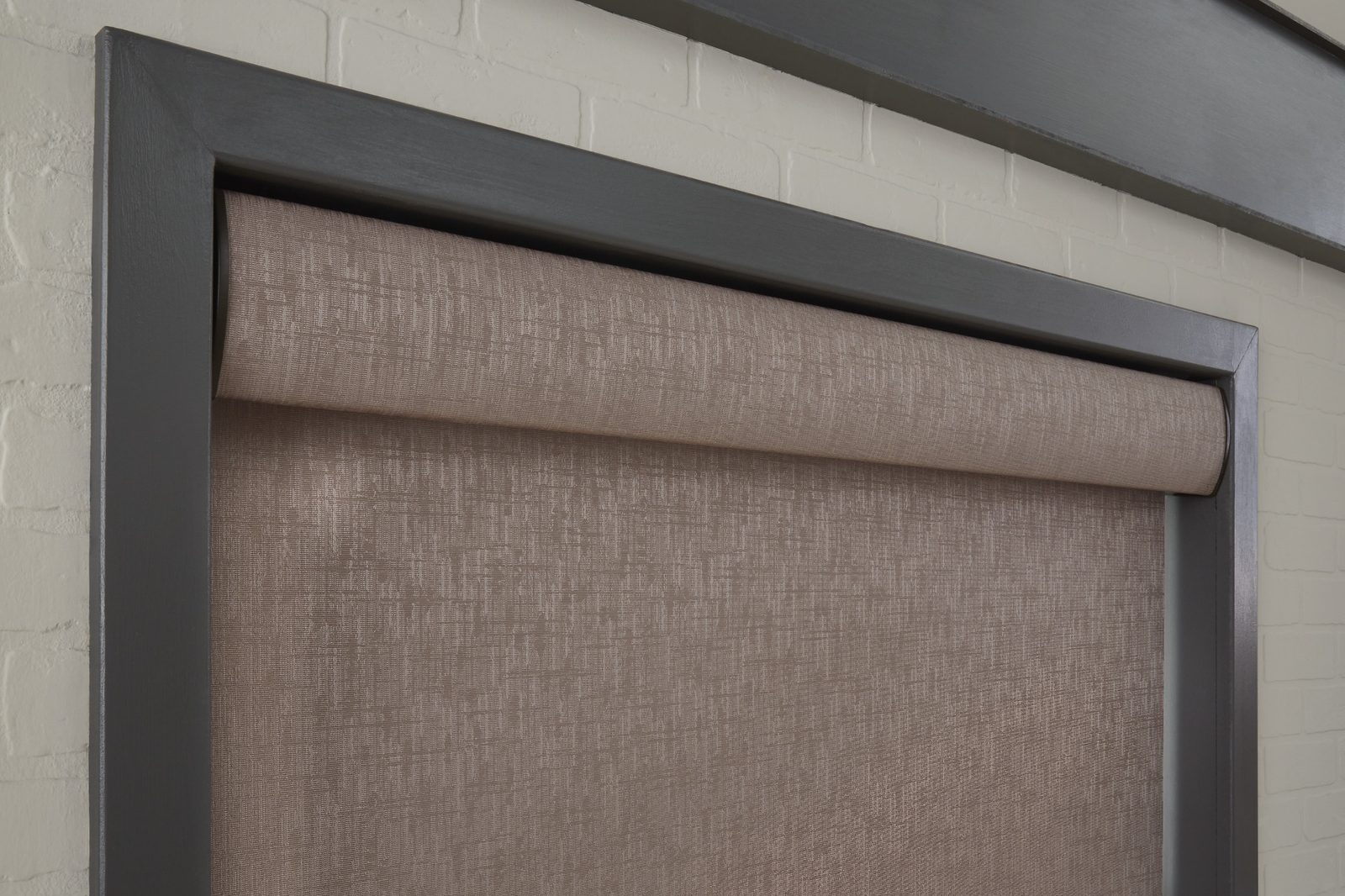
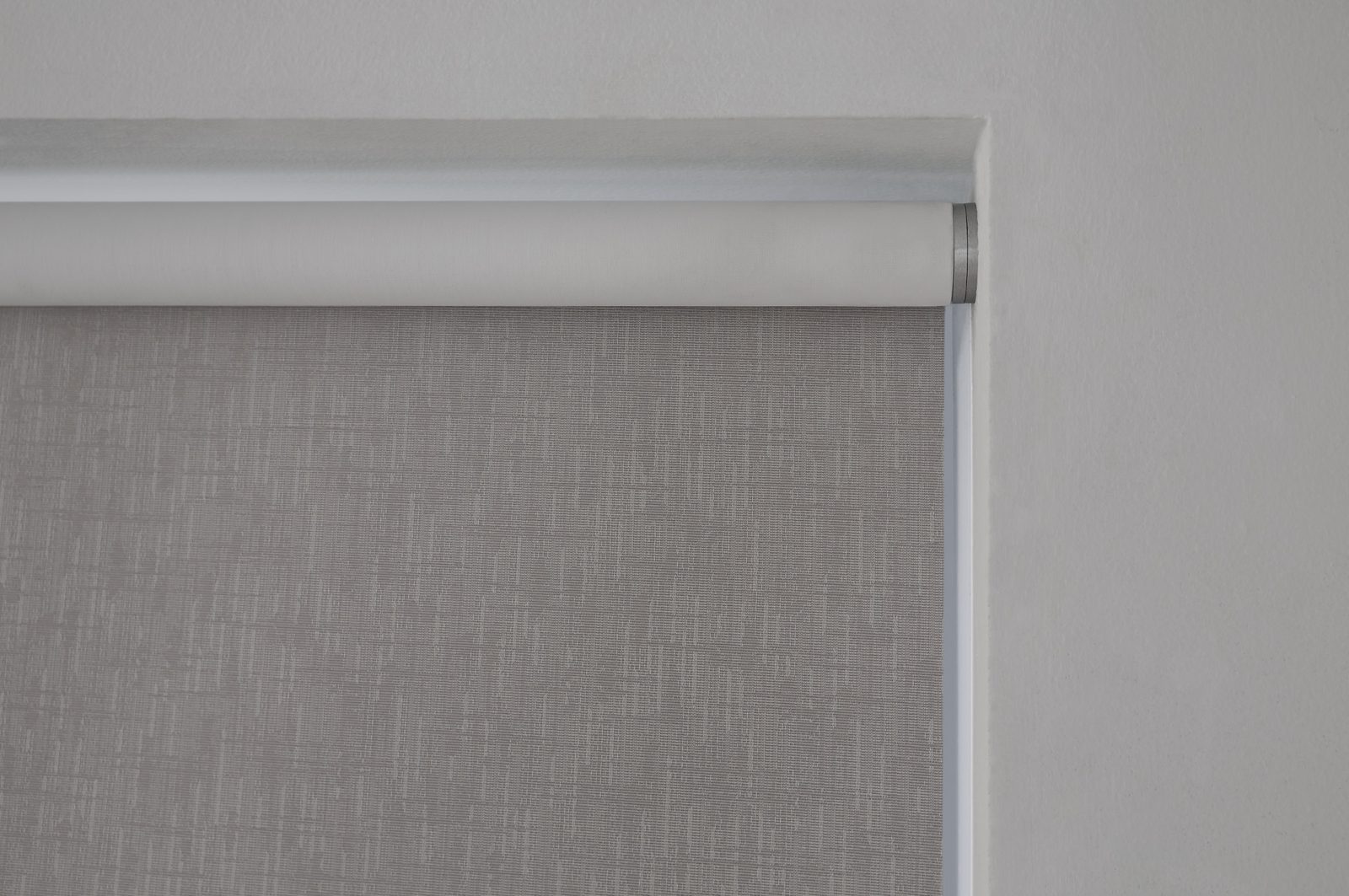
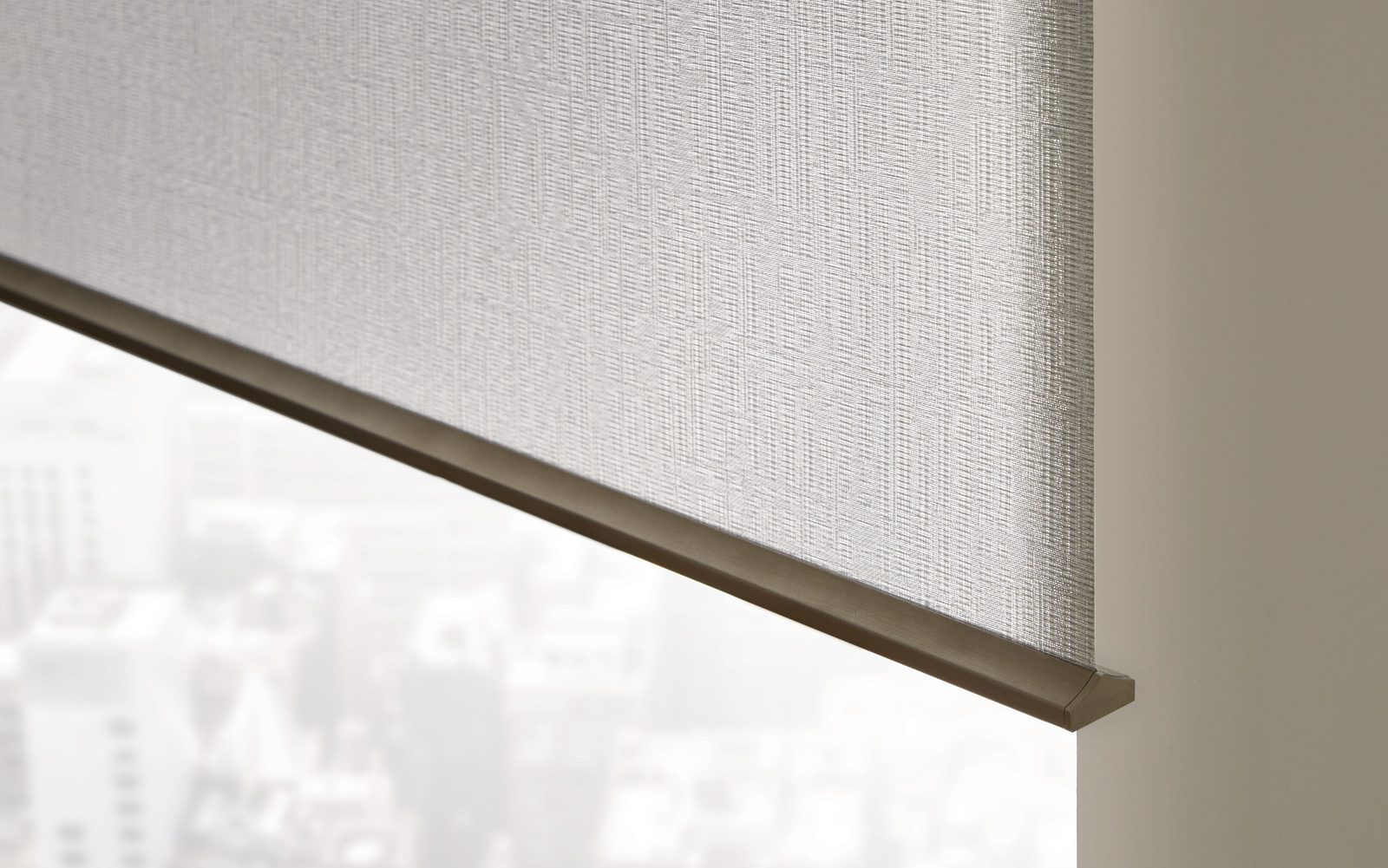
Most of what separates a good shade installation from a poor one is decided in details that are invisible once the job is finished. Pocket depth has to clear the roll at its largest diameter, which is a function of fabric thickness and drop, so a pocket sized from a standard detail will not close on a tall window with a heavy blackout fabric. Fascia profile and finish either match the ceiling plane or announce themselves. Light gap at the jamb is a function of the mounting method and the side channel, and on a blackout shade in a bedroom it is the difference between blackout and nearly blackout. Bracket placement has to coordinate with the framing before it is closed. We draw these details rather than discover them, and we issue them as part of a coordinated set.
Fascia profiles, hembars, brackets, and pocket conditions decide how a shade reads once the room is finished. These are the details we draw and coordinate before framing, and the ones worth looking at closely in San Carlos before a fabric is selected.
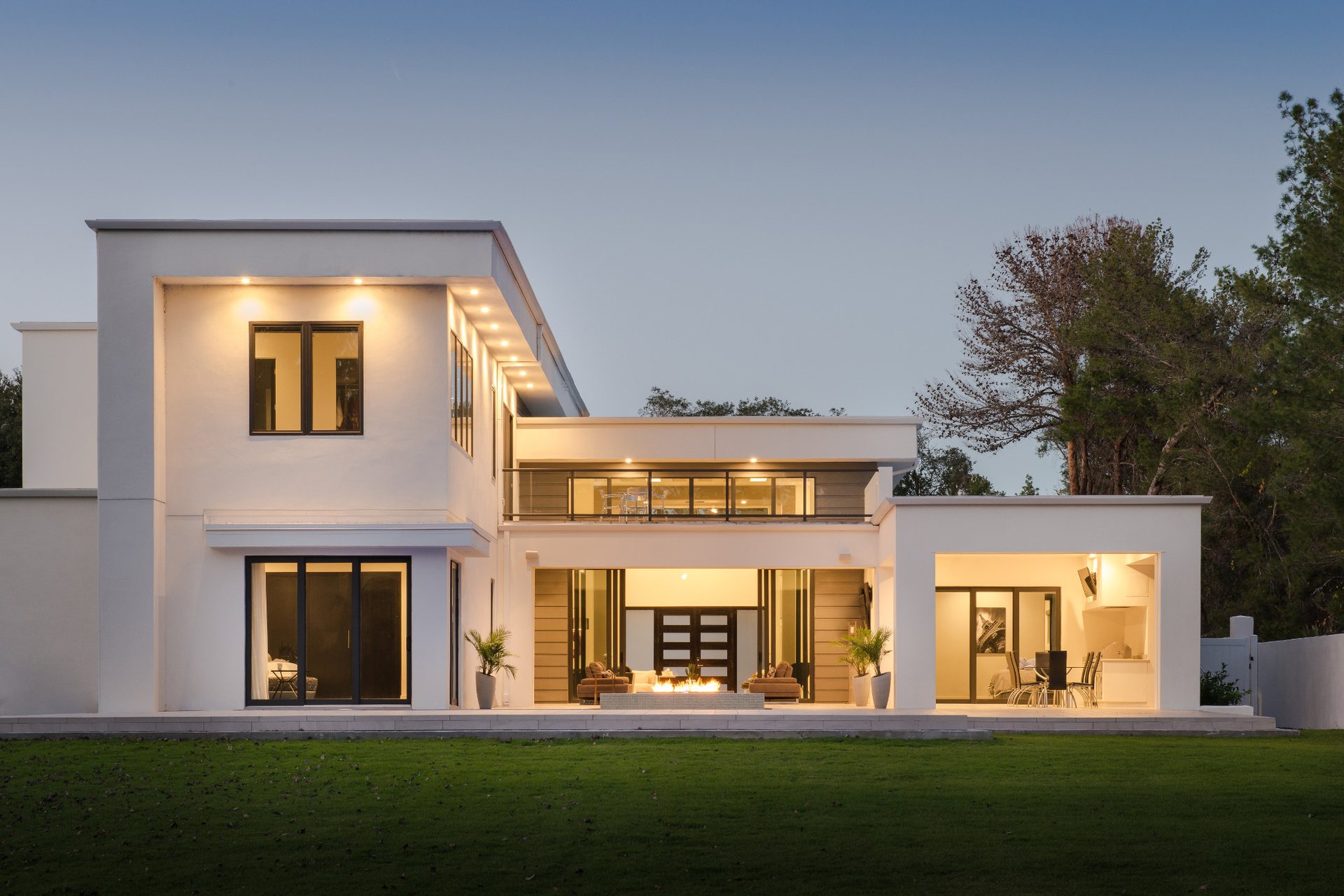
Regent5 provides in-house design for Lutron shading systems. We are not interior designers or architects; we handle the system layer between their drawings and a house that works. That includes shade selection support, fabric and opacity coordination, roll direction, system selection, light-gap expectations, pocket depth and integration with lighting and climate. The designer selects the fabric. The architect designs the ceiling. We tell the project team where the pocket has to be and how deep before it is framed. Lutron shade fabrics, Conrad samples, Palladiom finishes and keypad styles are available to review at the Regent5 Showroom & Design Center. Our core shading work spans San Francisco, Atherton, Woodside, Hillsborough, Palo Alto and Los Altos Hills, plus the wider Peninsula, Marin and North Bay, Napa and Sonoma, and Carmel and the Monterey Peninsula. Select project coverage extends through Santa Barbara, Los Angeles and Orange County.

Palladiom is the top of the Lutron shading range, and the cost is driven by the exposed hardware: brackets milled and hand-finished in solid aluminium and brass, designed to be seen rather than hidden in a pocket. It is specified on projects where the bracket is treated as part of the architecture.
We do not publish figures. Price per window depends on width, drop, fabric, whether the shade is wired or wire-free, and the bracket finish, and a number quoted without those is a number for a different window. Sivoia QS covers the same functions with the hardware concealed, and Triathlon is battery powered for retrofits. Most estates use more than one, chosen window by window.
Fabric moves the figure more than people expect, and it is the decision most often made last. We bring samples to the actual window, in the actual light, before anything is quoted.
Yes. Regent5 holds Lutron dealer status with HomeWorks certification, and we are a C10 and C7 licensed contractor, CSLB License 1033103. We are also a Conrad dealer for handwoven shades on Lutron motors, and an Insolroll dealer for Oasis exterior shading through the Lutron Roller 300 drive unit.
Yes. Our core shading work is throughout Northern California, including San Francisco, Atherton, Woodside, Hillsborough, Palo Alto and Los Altos Hills, along with the wider Peninsula, Marin and North Bay, Napa and Sonoma, and Carmel and the Monterey Peninsula. Lutron and Conrad shading systems can be reviewed in person at the Regent5 Showroom & Design Center. Select project coverage extends through Santa Barbara, Los Angeles and Orange County.
Yes. Lutron drapery tracks carry custom drapery on a motorized track, so heavy fabric opens and closes on a scene, a schedule, or a keypad button without anyone touching a cord. The track is specified to the fabric rather than the other way around, since weight, fullness, stack depth, and whether the treatment draws from one side or splits at the center all change the hardware.
Timing matters most. The track has to be in the ceiling detail before the ceiling is closed, so this is a decision made on drawings rather than after finishes. We work from the interior designer's fabric selection and the architect's ceiling section and tell both what the pocket has to accommodate while it can still be changed on paper.
Yes. Lutron offers its own fabric collections including Satine, Boucle, Hachure, and Stria in translucent, room darkening, and blackout weights. Beyond that, Regent5 is a Conrad dealer. Conrad handweaves window coverings from natural fibers with over one hundred original designs, and the company is part of the MillerKnoll collective.
The reason Conrad matters on an automated house is that Conrad motorizes with Lutron. A handwoven Conrad Roman shade sits on the same keypad, the same scene, and the same schedule as every other shade in the house, so a premium custom fabric does not force a separate control system. Conrad also handles work most manufacturers decline, including corner and bay windows, arched and angled openings, and French doors.
Regent5 is an Insolroll dealer, and Insolroll Oasis exterior shades run the Lutron Roller 300 electronic drive unit. That means they operate from the same Lutron system as the interior shades rather than from a separate remote. We have driven Insolroll exterior shades from both HomeWorks QS and HomeWorks QSX.
Exterior shading is worth understanding on its own merits. An interior shade stops light after it has already passed the glass and become heat in the room. An exterior shade stops it at the outside face of the window, blocking up to 97 percent of heat and UV before it enters. On west facing glass and exposed hillside elevations that difference shows up in both comfort and cooling load. The 2700 and 2800 use cable or track guided fabric, while the 2900 and 2950 use a zipper captured system that holds fabric taut in side tracks and keeps insects out, which is the specification for a covered terrace or outdoor room.
Yes to both. Lutron knows the GPS coordinates of the house and calculates sunrise, sunset, civil dawn, and civil dusk for every day of the year, so shades can run by sun event rather than clock time and stay correct across every season without anyone adjusting them. West facing shades can close ahead of afternoon glare. Bedroom blackout shades can lift on a wake sequence.
Voice control can be layered through supported ecosystems and automation platforms, depending on the Lutron system and project configuration. The important part is the underlying scene design: Regent5 builds reliable lighting-and-shade scenes first, then exposes the appropriate commands to voice or whole-home automation so the experience does not depend on brittle one-off phrases.
Sivoia QS is the wired platform, engineered so a run of shades moves together and stops together rather than drifting out of alignment across a wall of glass. It is normally hidden in a pocket and specified during construction while walls and ceilings are open.
Palladiom is designed to be seen. It exposes the roller and the hardware as a finished architectural element, machined in metal finishes that coordinate with Palladiom keypads and thermostats. That makes it the right choice when a shade pocket is not possible, when the ceiling detail will not accommodate one, or when the designer wants the hardware to read as part of the room. Palladiom also works with RadioRA 3, HomeWorks QS, and HomeWorks QSX, so it suits retrofit as well as new construction.
Pocket depth has to clear the roll at its largest diameter, which is a function of fabric thickness and drop. A pocket sized from a standard detail will not close on a tall window carrying a heavy blackout fabric, and that is discovered late and expensively if nobody checked.
Light gap at the jamb is the other one. It is a function of mounting method and side channel, and on a blackout shade in a bedroom it is the difference between blackout and nearly blackout. Fascia profile and finish either match the ceiling plane or announce themselves, and bracket placement has to coordinate with framing before it is closed. We draw these details and issue them as part of a coordinated set rather than discovering them on site.
Yes. Regent5 services Lutron shading installed by other companies, including situations where the original dealer has retired, closed, or stopped returning calls. Shade motors, hembars, brackets, and fabric are all serviceable, and a system that has drifted out of alignment can usually be recommissioned rather than replaced.
The first step on any inherited system is locating and verifying the original project file. A system with its file intact is a straightforward engagement. A system without one is a larger project, and we will tell you that honestly before starting.
Wired shades are usually preferred when power and control wiring can be planned during construction, especially for large openings, grouped shades and concealed pockets. Battery-powered options can be valuable in finished rooms where opening walls is undesirable. The right choice depends on window size, fabric, access, service expectations and the Lutron control system already planned for the home.
Yes. Lutron shades can be coordinated with lighting scenes, schedules and supported whole-home automation platforms so a single command can adjust both electric light and daylight. Regent5 designs the shade behavior around the room, orientation and daily use rather than treating every window as an independent motorized product.
Regent5 provides consultations for Lutron shading and drapery projects, whether you are starting a new build, planning a remodel, or looking for someone to take over an existing system. Send us your contact information and a short outline of the project and we will put you with the right person.


.svg)

© 2026 Regent5, LLC. CSLB C10 & C7 License 1033103.

